ServicesTurf Protection Film
Turf Protection Window Film in Deer Park
If a strip of your artificial grass has melted or your vinyl siding has started to ripple, a nearby window may be focusing sunlight onto it. We trace the reflection, fit a film that diffuses it and leave the glass looking clean.
Why Windows Melt Turf, and How Film Stops It
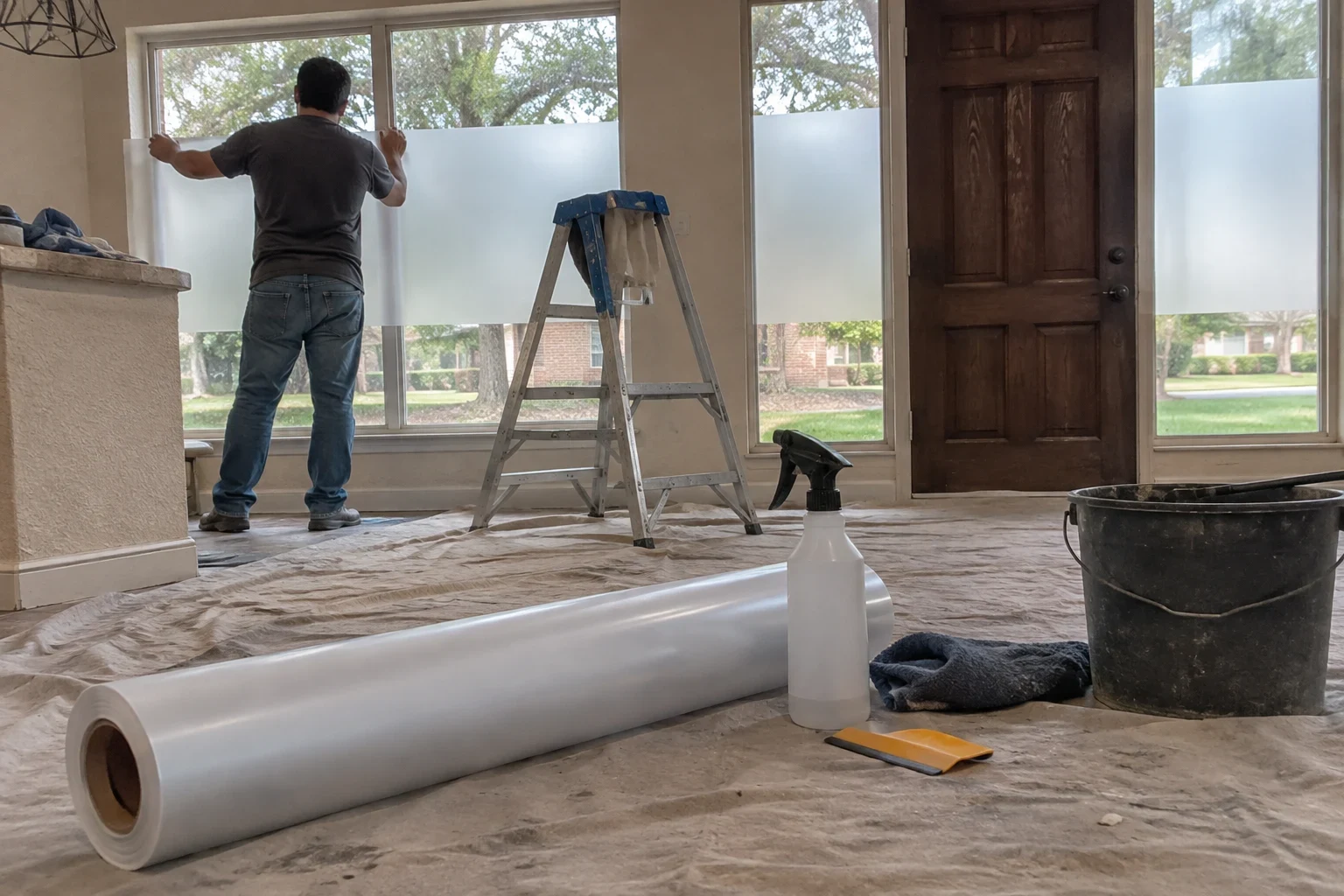
Modern double-pane windows with low-E coatings are very good at bouncing heat away from a house. The trouble starts when the sealed panes flex slightly inward with temperature and pressure changes. The glass then acts like a shallow concave mirror and concentrates reflected sunlight into a narrow, hot band. On synthetic turf, which is usually polyethylene or nylon, that band can soften and fuse the blades in a single afternoon.
Turf protection window film breaks up that reflection. Depending on the window, we use a film that lowers exterior reflectivity or one that scatters the light so it no longer lands as a focused beam. The heat still leaves the glass, it just spreads out instead of landing in one spot.
You deal with one person from the first phone call to the final check. The same contact who looks at the damage also confirms the film choice, schedules the install and comes back to see that the hot spot is gone.
What the Work Includes
- Tracing the reflection
- We match the damage pattern to the window causing it. Melt lines often move with the season, so we look at the sun's path and the shape of the scorch mark before naming a culprit.
- Film matched to the glass
- Low-E and argon-filled units do not all accept the same film. We check the glass type and choose a product suited to it, so you avoid thermal stress on the pane.
- Careful preparation
- The glass is cleaned, the edges are detailed and the surrounding trim and flooring are covered before any film goes up.
- Clean, edge-to-edge finish
- Film is trimmed tight to the frame with even gaps and no lifted corners. From a normal viewing distance it reads as ordinary glass.
- Follow-up check
- On a sunny day after the install we confirm the reflection has diffused and the hot spot no longer forms.
Signs a Window Is Damaging Your Yard
A melted line in artificial grass
Fused, shiny or flattened blades in a curved or straight strip are the classic sign. The mark often lines up with a window across the yard.
Rippled or warped vinyl siding
Vinyl begins to distort at temperatures a focused reflection reaches easily. A wavy patch on one wall, facing glass, points to reflected sunlight.
Scorched outdoor items
Warped trash bins, softened plastic chairs or a melted grill cover in the same spot more than once suggest a reflection rather than bad luck.
A spot that feels hot to the touch
If one area of the patio or turf is far hotter than the rest at a certain hour, a window is likely aiming light at it.
A neighbor mentions it
Sometimes the damage is next door and the window is yours. Film on your glass is usually the fastest fix for both sides.
How a Turf Protection Job Runs
- 1
Phone consultation
You describe the damage and roughly when it appears. We talk through likely causes and set a visit.
- 2
On-site assessment
We look at the scorch pattern, the window angles and the glass itself, then recommend a film and explain why it suits that window.
- 3
Installation day
Most jobs involve one to a few windows and take a short visit. We protect the area, clean and fit the film and wipe down the glass and sills.
- 4
Curing and confirmation
Film can look slightly hazy for a few days while moisture dries out. We check back once it has cured and the sun is out to confirm the reflection is gone.
What Moves the Cost
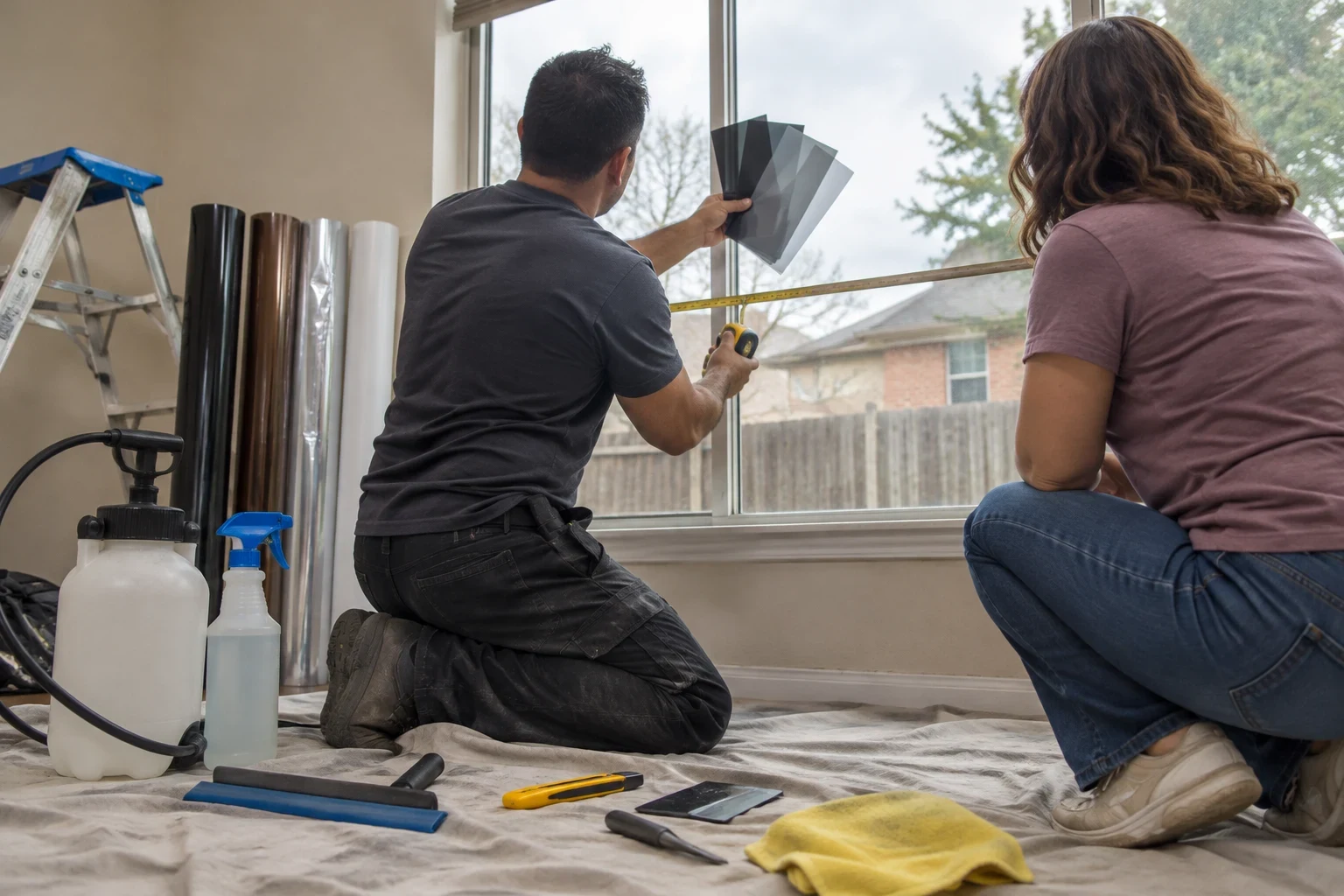
Turf protection is usually a small, targeted job, so the price depends mostly on which windows are involved and how easy they are to reach. We give you a clear quote after seeing the glass, with each window listed.
- Number of windows
- Some yards have one offending pane. Others have two or three that overlap at different times of year, and each needs film.
- Window size and height
- Large or second-story windows take more film and may need ladders or extra setup time.
- Film type
- Exterior anti-reflective films and diffusing films are priced differently. The right one depends on your glass and how the window looks from inside.
- Glass condition
- Failed seals, scratches or old film that must come off first add prep time. We point these out before any work starts.
Turf Protection Film Questions
Something not covered here? (281) 645-5513
Will the film change how my window looks from inside?
Most turf protection films are very subtle from indoors. Some add a slight softening to the view, which we show you on a sample before you decide. The goal is to fix the reflection without making the room feel dim.
The reflection comes from my neighbor's window. Can you help?
The film has to go on the glass that is reflecting the light, so the window owner needs to agree to the work. We are happy to assess it and explain the fix to both households so the conversation is easier.
Will film void my window manufacturer's warranty?
Some window makers set terms about aftermarket film, especially on low-E units. Check your window paperwork, and we will help you read it and pick a film that fits those terms.
Can I just replace the damaged turf instead?
You can, but the same window will melt the new section as soon as the sun lines up again. Film addresses the cause, so a turf repair stays repaired.
Does this film also keep the room cooler?
Turf protection film is chosen for the reflection problem first. If you also want heat rejection inside, we can talk about ceramic window film or home window tinting on other windows during the same visit.
Stop the Melting Before the Next Sunny Week
Tell us where the damage is and when you notice it. One person will walk you through the cause, the film and the schedule.