ServicesCeramic Window Film
Ceramic Window Film in Deer Park
Ceramic window film cuts the heat that pours through sunny glass without turning your windows dark or mirrored. We help you choose the right shade, check that your glass is a good match, and install it cleanly inside your home or office.
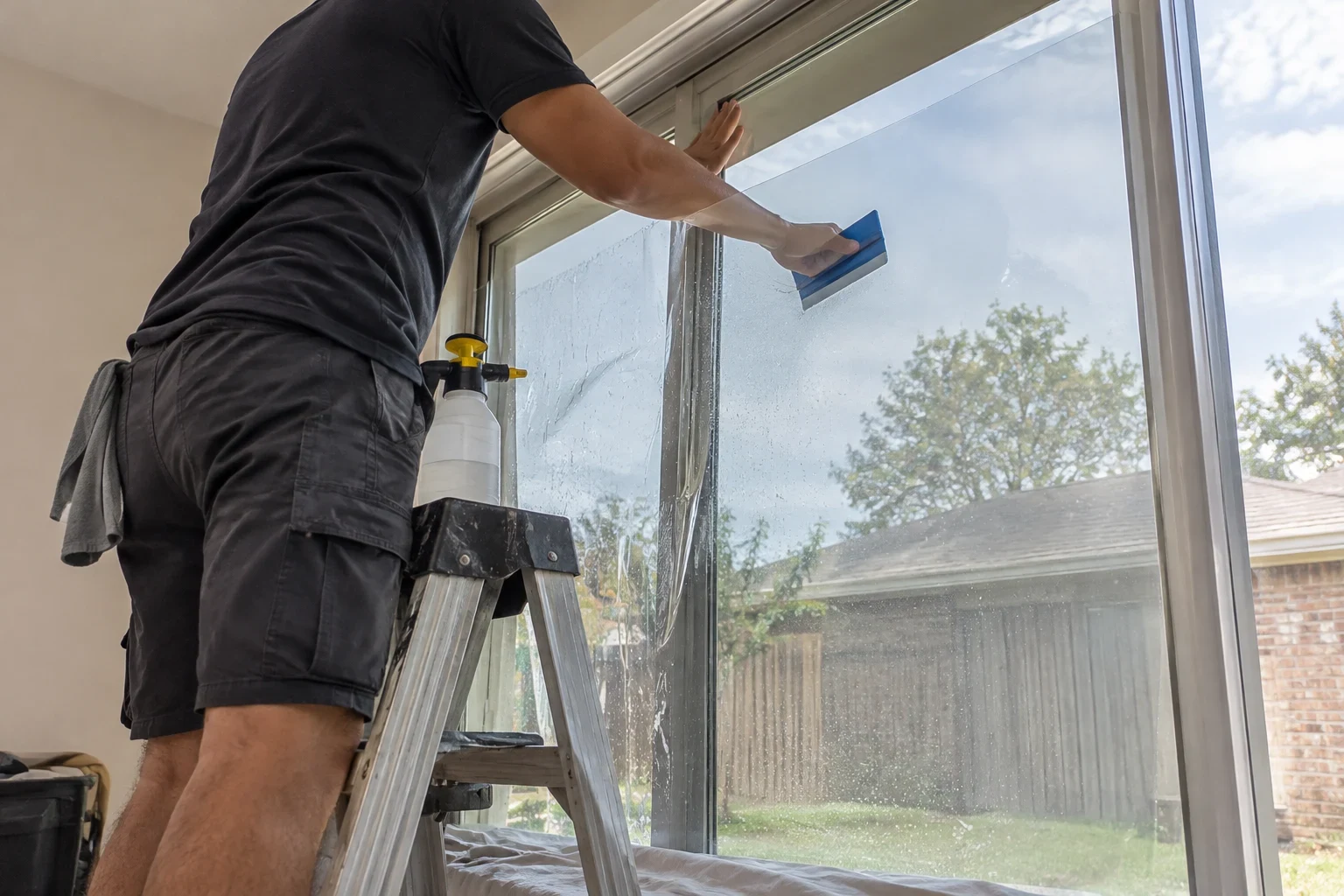
Heat Rejection You Can Barely See
Ceramic film uses fine non-metallic particles to block much of the infrared light that makes a room feel hot, along with nearly all UV. Because it relies on those particles instead of a metal layer, it can do serious work in a light shade. You keep the daylight and the view, and the glass looks close to how it does today.
It is the right call when a west-facing living room, a sunroom or an office wall of glass is too warm by afternoon, and you do not want the reflective look of older films. It also holds up well in humid Gulf Coast air, since there is no metal in it to corrode at the edges over time.
From the first phone call to the final wipe-down, you deal with one person. The same contact who answers your questions about film also schedules the install and checks the finished glass with you.
What Your Ceramic Film Job Includes
Shade and sample review
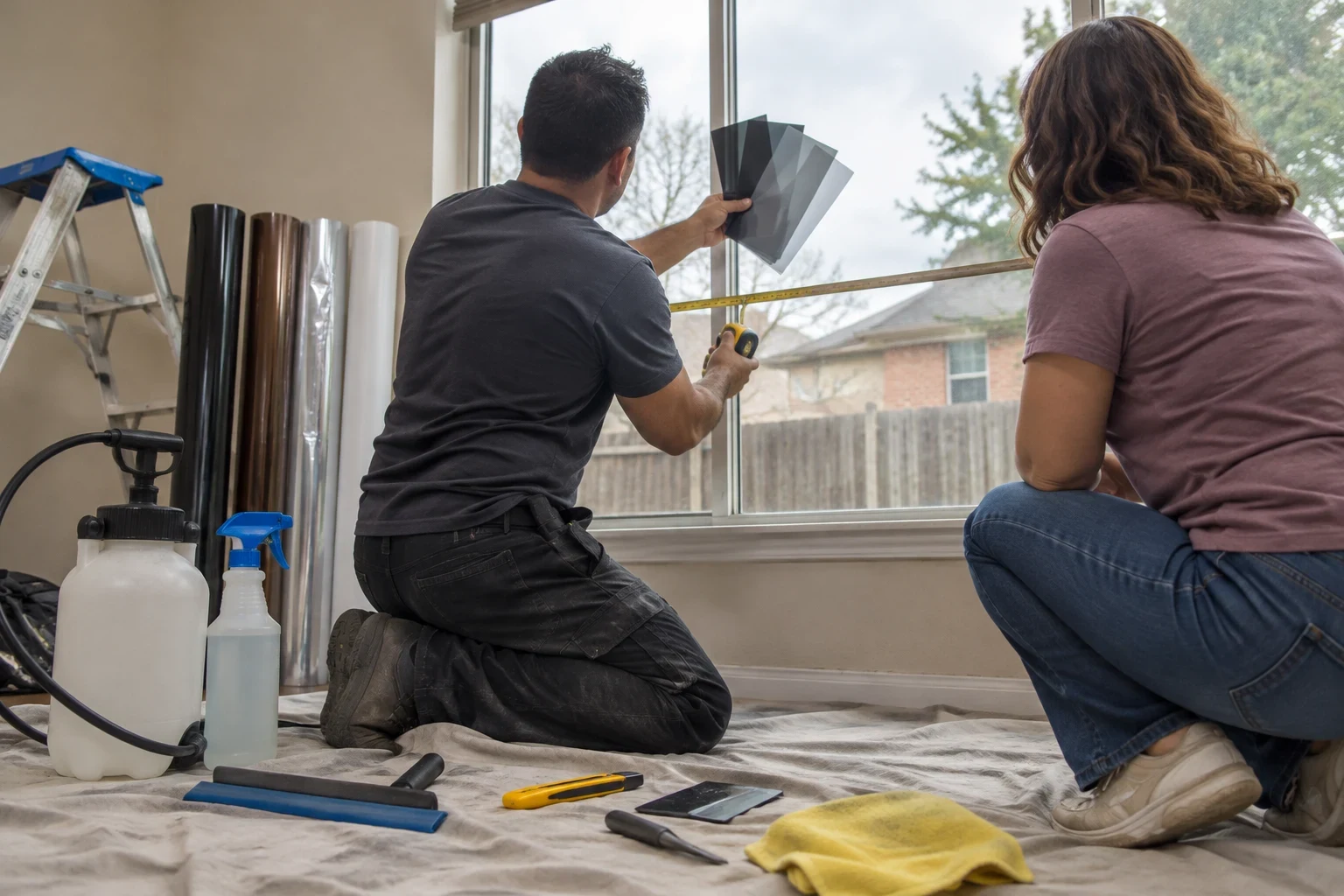
We bring ceramic film samples in several light levels and hold them up to your actual windows. Seeing them in your own light is the best way to judge clarity and tint.
Glass compatibility check
We look at whether each pane is single, dual-pane or low-E, and note its size and sun exposure. Some combinations need a specific film to avoid thermal stress on the glass, and we tell you plainly if a window is not a good candidate.
A written, line-item estimate
You get the film, the window count and any extra work listed out, so you can see what each part of the job covers before you decide.
Careful installation
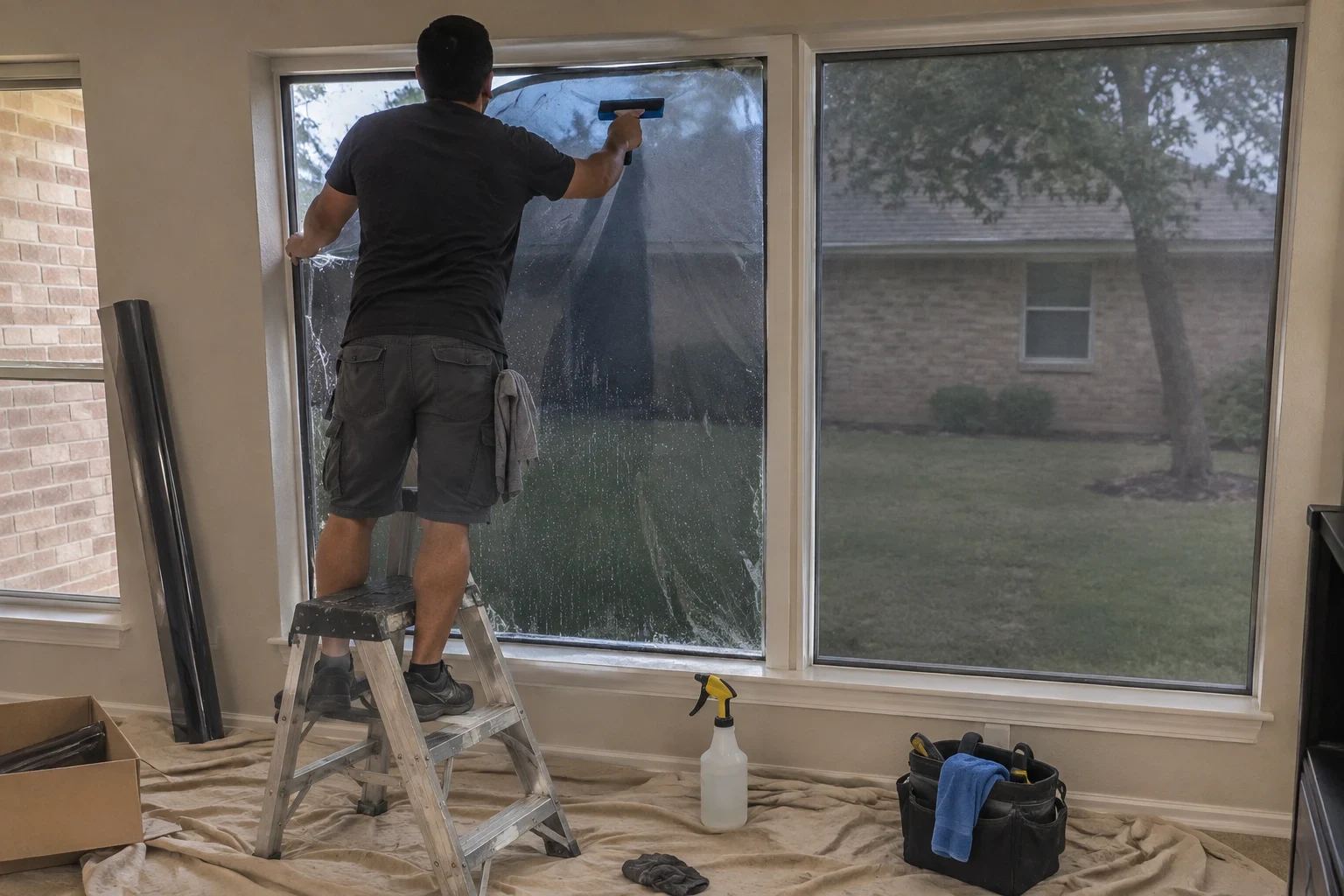
The glass is scraped and cleaned, the film is cut to fit, and edges are trimmed close to the frame for a tidy line. Sills and floors are covered while we work.
Cleanup and care instructions
We remove our trimmings and drop cloths and wipe down the work area. You also get simple guidance on curing and cleaning the new film.
Signs Ceramic Film Is a Good Fit
- One room runs hot every afternoon
- If the thermostat says one thing and a sunny room feels another, infrared heat through the glass is often the cause. Ceramic film targets that heat directly.
- You want cooler, not darker
- Some people want relief from the sun but love their natural light. Ceramic film is the option that rejects heat well in light, clear shades.
- Floors and furniture are fading
- Sun-bleached rugs, wood floors and upholstery are a sign of UV exposure. Ceramic film blocks nearly all of it.
- Older film has gone purple or bubbled
- Dyed films break down and discolor. When we remove old film, ceramic is a lasting replacement that will not shift color the same way.
- Metallic film hurt your signal
- Metallized films can weaken cell and Wi-Fi reception indoors. Ceramic film is non-metallic and does not interfere with either.
How the Work Goes
- 1
A phone conversation first
You tell us which rooms bother you and what you hope to change. We answer questions about ceramic film and set up a time to see the windows.
- 2
An unhurried visit
We measure, check the glass type, and compare samples at your windows at the time of day the sun is worst if we can. Your estimate follows in writing.
- 3
Install day
We move small items away from the windows, protect sills and floors, clean each pane thoroughly and apply the film. Most homes are finished in a day, and you can stay in the house the whole time.
- 4
Walkthrough and curing
Before we leave, we look over each window with you. The film may look slightly hazy or show small water pockets for a few weeks as it cures, which is normal and clears on its own.
What Shapes the Price
Ceramic film costs more per foot than basic dyed film because of the material itself. The total for your job depends mostly on how much glass there is and how easy it is to reach. Your written estimate shows each of these so nothing appears later.
- Square footage of glass
- Larger windows and more of them mean more film and more labor. Many people start with the hottest rooms and add others later.
- Film grade and shade
- Ceramic films come in several performance levels. Higher heat rejection in a lighter shade usually sits at the upper end.
- Access and window height
- Second-story glass, transoms and windows behind built-ins take ladders, staging or extra care.
- Removing old film
- Stripping failed tint and its adhesive is slow, careful work and is priced separately from the new install.
Ceramic Window Film Questions
- Does ceramic film turn a bright room dim?
- That depends on the shade you pick, and the lightest ceramic films barely change the daylight. Even those pale options stop a good share of the infrared heat coming through the glass. During the visit we hold samples against your windows so you can judge the light level in your own room before anything is ordered.
- Is it safe on dual-pane or low-E windows?
- In most cases it is, though the answer depends on the specific glass and film. We look at how each window is built and how much direct sun it gets, then pick a film suited to it. If a pane is not a good candidate, we tell you plainly rather than film it anyway.
- How is ceramic film different from reflective film?
- Reflective film uses a metallic layer to bounce heat away, which gives the glass a mirror-like face from outside. Ceramic film handles infrared with non-metallic particles, so the glass stays clear and low-glare. If daytime privacy is your top concern, our Reflective Window Film page covers that choice.
- Will my phone, Wi-Fi or smart devices still work normally?
- Yes, they should. Ceramic film has no metal in the layer that rejects heat, so nothing in it blocks signals. Your phone, router, thermostat and doorbell camera keep working the way they do now.
- How should I clean the film?
- Give the film time to cure completely first. After that, a soft cloth and a gentle cleaner without ammonia is all it needs. Keep razor blades and scouring pads away from the filmed side of the glass.
See Ceramic Film on Your Own Windows
We serve Deer Park and nearby towns like Pasadena, La Porte and Seabrook. One phone call gets you a free consultation and a clear look at your options.