ServicesReflective Window Film
Reflective Window Film in Deer Park
Reflective window film sends a large share of the sun's heat back out before it reaches your room. We fit it to the windows that bake every afternoon, explain how it will look from inside and out, and one person handles your job from first call to cleanup.
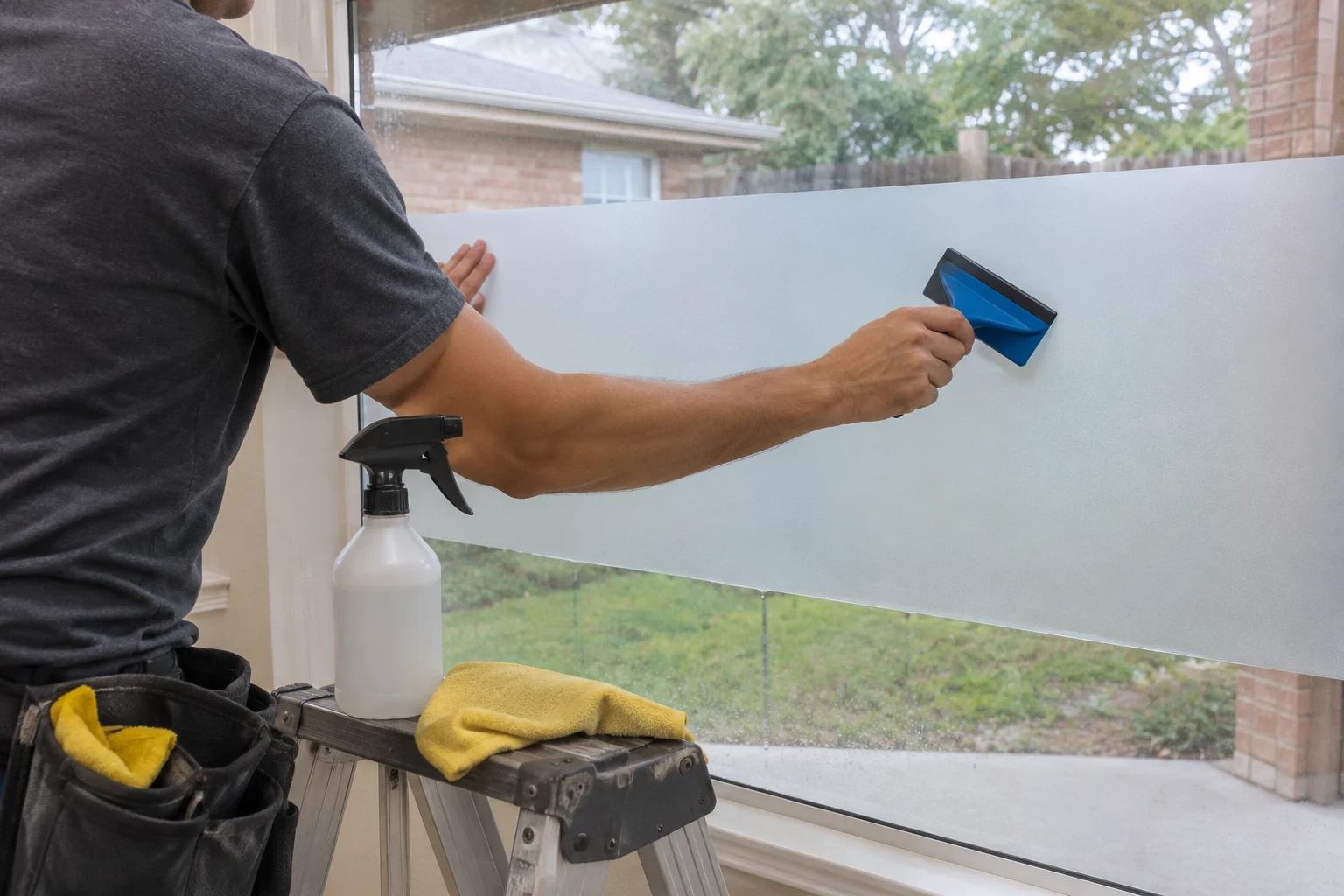
When reflective film is the right choice
Reflective film carries a thin metalized layer, usually aluminum or a blend of sputtered metals, laminated between sheets of polyester. That layer reflects solar energy instead of only absorbing it, which is why it delivers some of the strongest heat rejection of any film we install. It also gives a mirrored look from outside during the day, so passersby see a reflection instead of your living room.
It is a good fit for west and south windows, sunrooms, tall stairwell glass and office fronts that face open sky. It is less suited to rooms where you want the glass to look untouched, or where a mirrored exterior would clash with the house or an HOA rule. In those cases we will point you toward ceramic window film or non-reflective window film and tell you why.
You talk with the same person from the first question to the final walk-through. That person measures, recommends a shade, schedules the install and checks the finished glass with you.
What the work includes
An in-person look at your glass
We check pane type, size, any existing film and how the sun hits each window. Double-pane and tinted glass get extra attention, because not every reflective film is approved for every glass type.
Samples on your actual windows
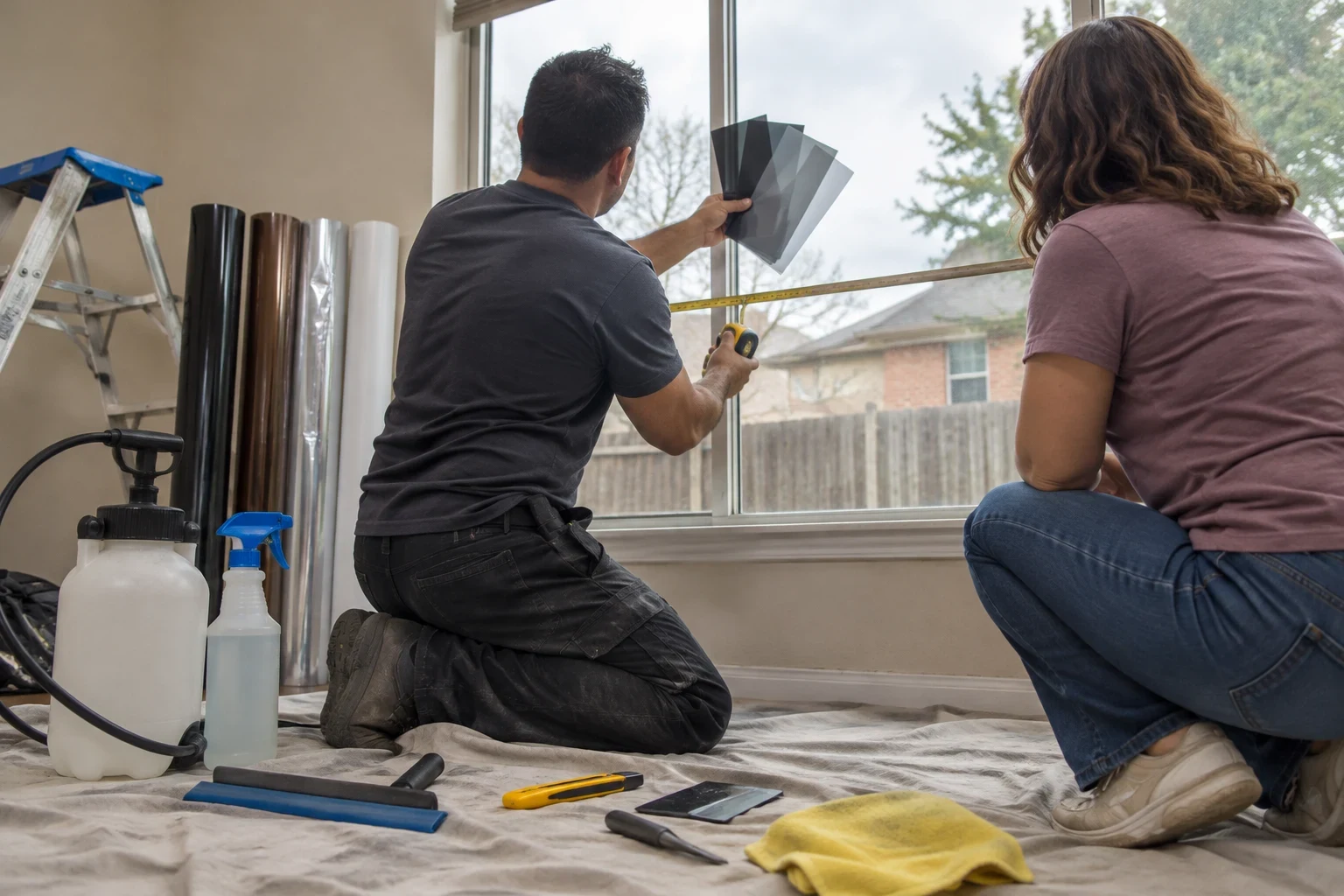
We hold silver, bronze and neutral gray samples against your glass so you can see the inside view and the street view before you choose. A sample in hand tells you more than any photo.
A written, line-item estimate
Each window or group of windows is listed with its film and square footage. If old film has to come off first, that appears as its own line.
Careful wet application
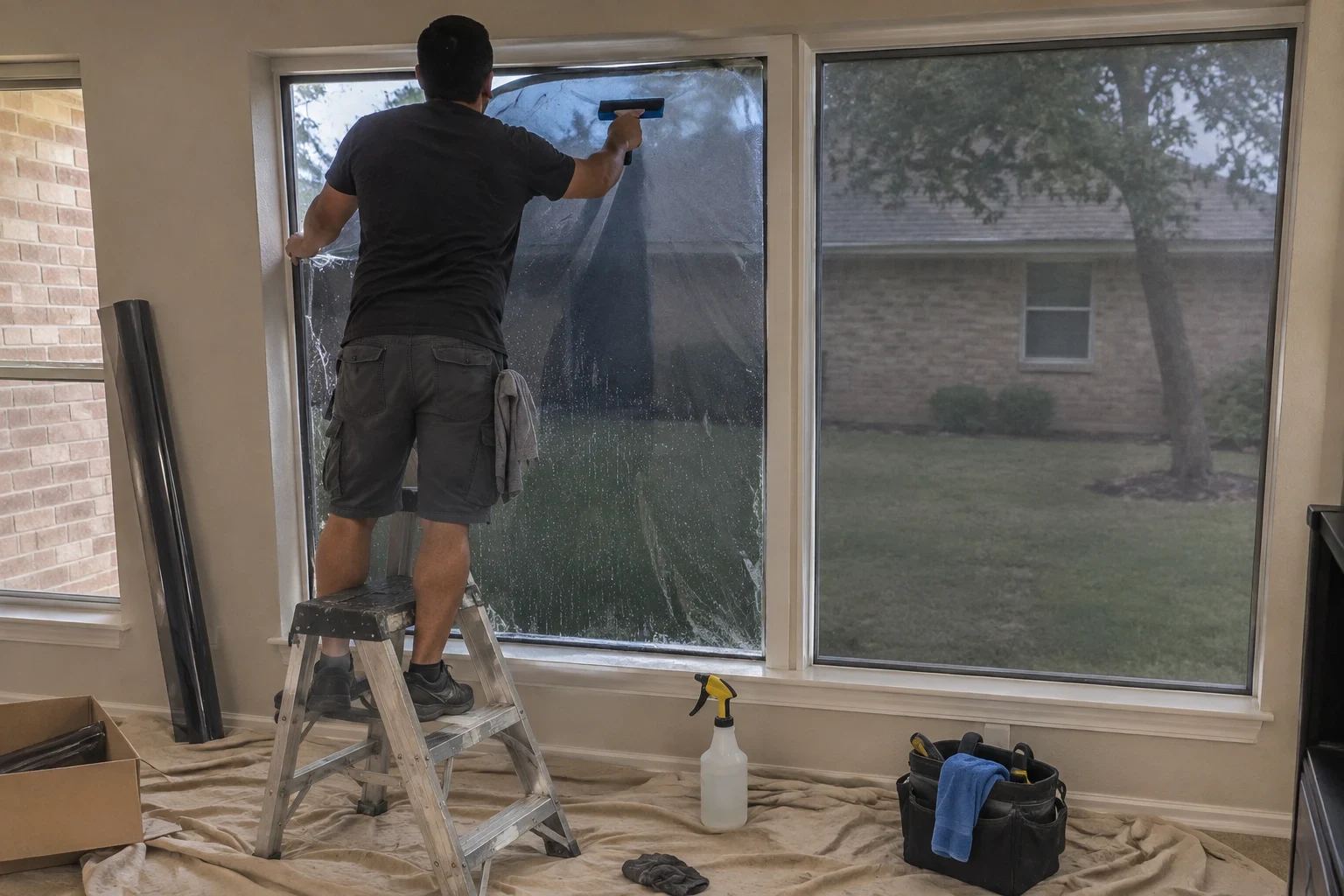
Glass is scraped and cleaned, the film is laid on with a slip solution, squeegeed flat and trimmed with a fine edge gap so it sits cleanly inside the frame.
Protection and cleanup
Sills, floors and nearby furniture are covered while we work. We wipe down frames, haul off trimmings and leave the room ready to use.
Signs your windows call for reflective film
- One room is always hotter
- If a bedroom or office runs several degrees warmer than the rest of the space every afternoon, the glass is usually the cause. Reflective film targets that solar gain directly.
- Blinds stay closed all day
- Keeping shades down to stay comfortable means giving up the view and daylight. Reflective film lets you open them again.
- Glare on screens and TVs
- Low sun across a monitor or television is tiring to work around. A reflective shade cuts that brightness noticeably.
- Faded floors and fabrics
- Rugs, wood floors and upholstery near the glass lose color over time. The film blocks most UV, which slows that fading.
- You want daytime privacy without curtains
- Street-facing windows can feel exposed. Reflective film makes it hard to see in while the outside is brighter than the inside.
How your install goes
- 1
A first conversation by phone
Describe the windows that trouble you and the hours the sun is worst. From there we arrange a visit to see the glass in person.
- 2
Measure and choose
At your place we measure every pane, check the glass type against the film maker's guidelines and show samples. You get a written estimate and time to think it over.
- 3
Install day
We cover the work area, prepare the glass and apply the film one window at a time. Most rooms stay usable while we move through the house or office.
- 4
Walk-through and curing
We look at every window with you before we leave. Small water spots or a light haze are normal and fade as the film cures over the next few weeks, especially in humid summer weather.
What affects the price
Reflective film is priced by the glass, not by the house, so two similar homes can come out quite differently. We explain each number on the estimate and stick to the scope we agreed on.
- Total glass area
- Square footage drives most of the cost. Large picture windows and floor-to-ceiling panels add up quickly.
- Film grade and shade
- Dual-reflective and premium sputtered films cost more than basic silver film. They usually look less mirrored from inside at night.
- Access and window shape
- Second-story glass, ladders over stairwells and French doors with divided panes take more time to fit cleanly.
- Removing old film
- Peeling or bubbled film has to be stripped and the adhesive scraped off before new film goes on. That labor is quoted separately.
Reflective window film questions
- Can people see in at night?
- Yes, when your lights are on and it is dark outside. The privacy works on brightness, so after sunset the effect reverses and you will see your own reflection from inside. Plan on blinds or curtains for evening privacy, or ask about privacy window tinting for rooms that need to stay screened day and night.
- Is reflective film safe on double-pane windows?
- Usually, but not always. Reflective film raises the temperature of the glass, and some insulated or already tinted panes can crack from that extra stress. We check your glass against the manufacturer's approved list before recommending anything, and if a film is not approved for your windows, we will not install it.
- Will my house look like a mirror from the street?
- It depends on the shade. Bright silver is very mirrored, while bronze, gray and dual-reflective films are softer. If you have an HOA, check its rules on exterior appearance first; we can bring samples you can show the board.
- Will it affect my phone signal or my houseplants?
- Heavily metalized film can weaken cell signal slightly in some rooms. If that worries you, ceramic window film is a metal-free option. Most houseplants adjust well, though sun-hungry plants near the glass may need a brighter spot.
- How is it different from ceramic or non-reflective film?
- Reflective film rejects heat mainly by mirroring sunlight and gives daytime privacy. Ceramic window film blocks heat with nonmetal particles and keeps the glass looking nearly clear. Non-reflective window film avoids the mirrored look entirely. We will lay out the tradeoffs on your own windows.
See reflective film on your own glass
Tell us which windows run hot, and we will bring samples so you can judge the look from both sides. The same person stays on your job until the last window is checked.