ServicesHome Window Tinting
Home Window Tinting in Deer Park
We fit window film that takes the heat and glare out of the rooms you use most, without darkening your home more than you want. One person answers your questions, measures, schedules the work and checks the finish with you.
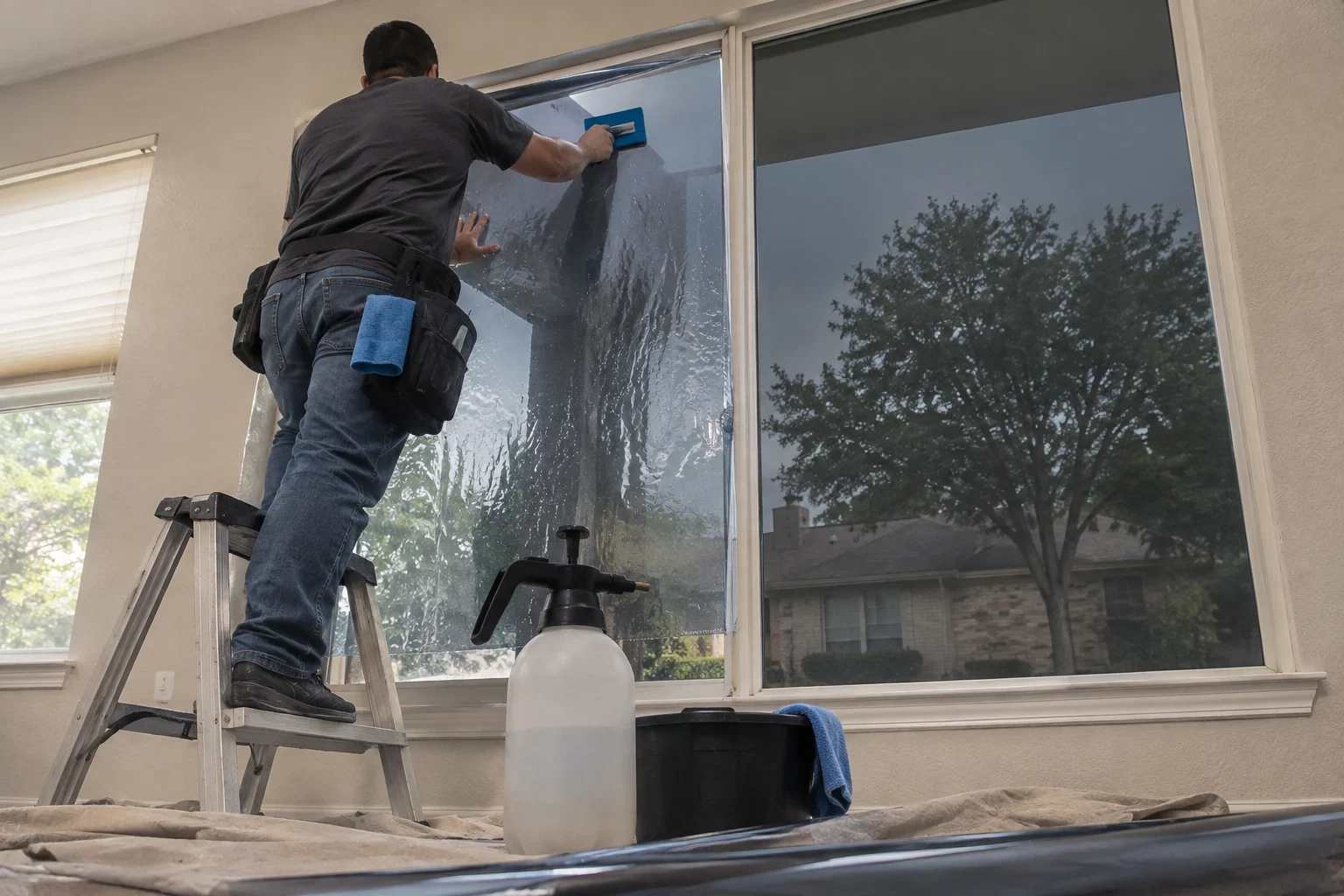
What home window film does for a room
Window film is a thin, optically clear layer applied to the inside of your glass. Depending on the film, it rejects a share of the sun's heat, cuts glare on screens and floors, and blocks nearly all of the UV light that fades rugs, wood and artwork. Good residential films can do this while still looking close to clear from inside.
It is the right call when one or two rooms carry the problem: a living room that bakes every afternoon, a bedroom that never gets dark enough, a hardwood floor going pale under a big window. In a long Gulf Coast summer, that afternoon sun is what pushes the AC hardest, and film works on it at the glass.
You speak with the same person from the first call to the final walk-through. That means the film you discussed is the film that goes on, and you never have to repeat your notes to someone new.
What your installation includes
- A room-by-room look
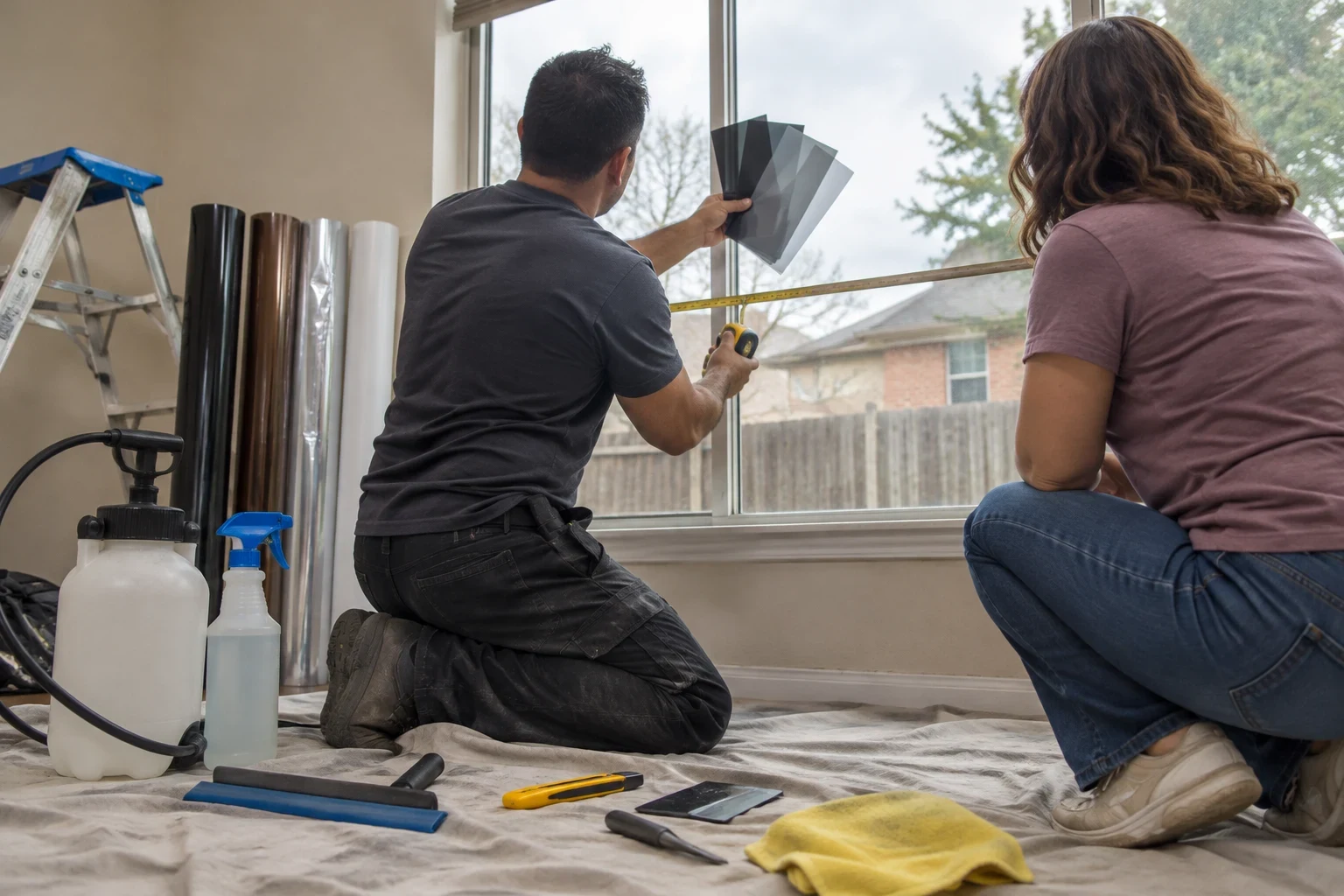
- We note which windows face the hard sun, what each room is used for and what is bothering you there. Not every window needs the same film, and some may not need any.
- Glass and film matching
- We check whether your windows are single-pane, double-pane or low-E. Some darker films absorb enough heat to stress certain insulated glass, so we choose a film suited to the glass rather than the darkest sample.
- Samples in your own light
- We hold film samples against your actual windows so you see the shade and reflectivity at the time of day that matters to you.
- Careful preparation
- Glass is scraped and cleaned edge to edge before any film goes on. Dust left behind shows up as a speck under the film, so this step takes real time.
- Protected floors and sills
- We lay down drop cloths and towels, move what needs moving with you, and keep the slip solution off your sills and walls.
- Cleanup and walk-through
- Scraps, liners and towels leave with us. We look at every pane together before we go.
Signs your rooms would benefit from film
One room is always warmer
If a room on the west or south side stays hot while the thermostat reads fine, direct sun through the glass is usually the cause.
Glare on screens
You close the blinds to watch TV or work on a laptop, then sit in a dim room in the middle of the day.
Fading floors and fabric
Lighter patches on hardwood, sun-bleached cushions or curtains that have lost their color point to UV coming through untreated glass.
Blinds that never open
If you keep window coverings shut for heat or privacy, film can let you open them again and enjoy the light.
High summer cooling bills
Solar heat through windows adds steadily to cooling load. Reducing it can bring energy savings, especially in rooms with large glass areas.
How the job runs
- 1
Consultation and quote
We visit, measure and talk through what you want from each room. You get a written quote that lists the film and the windows it covers.
- 2
Scheduling with one contact
The same person who quoted the job sets the install date and tells you what to clear from the windows beforehand. Most homes are finished in a single day.
- 3
Installation
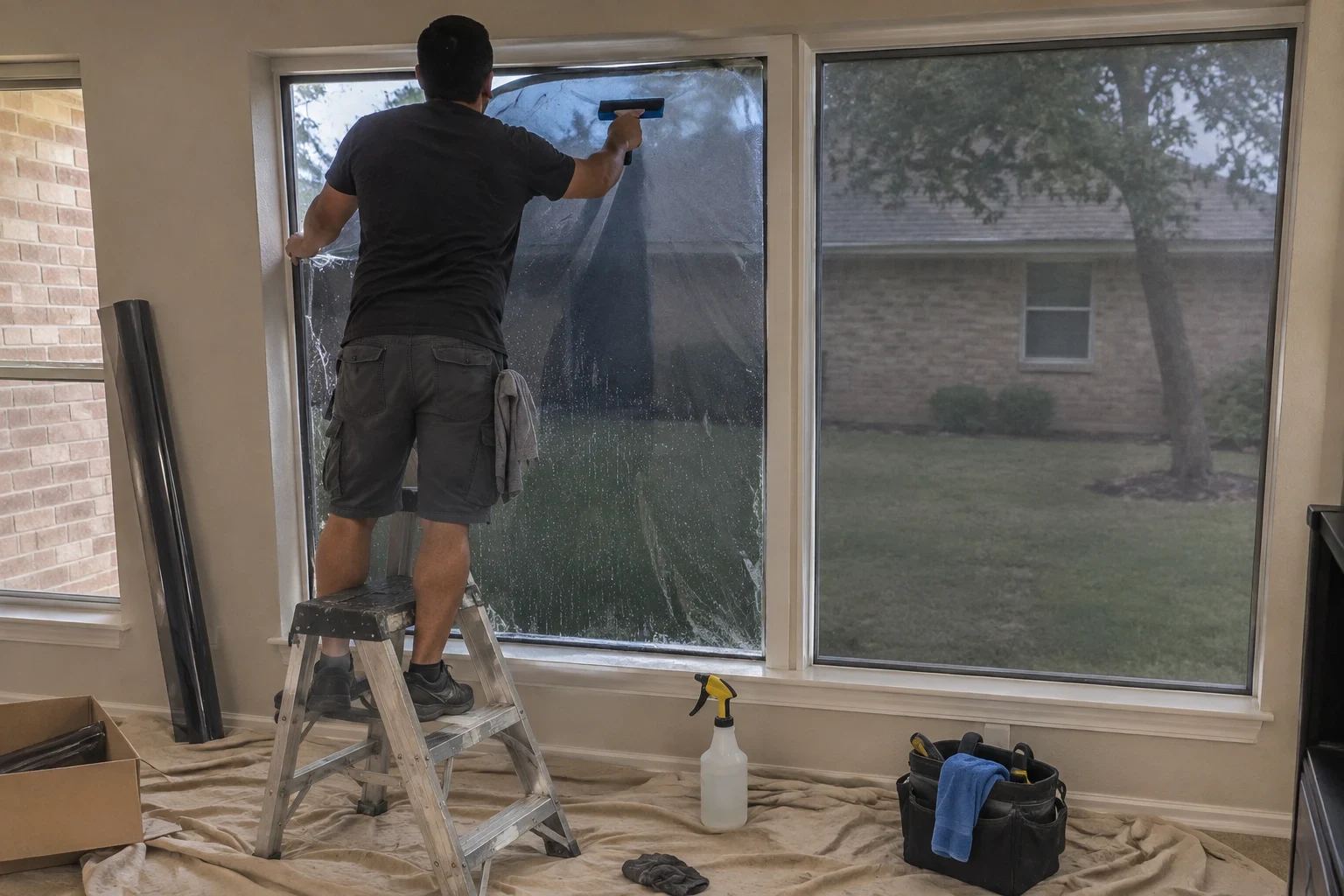
Each pane is cleaned, the film is laid on with a slip solution, squeegeed flat and trimmed with a fine gap at the edges so it sits cleanly in the frame.
- 4
Curing and follow-up
For the first days or weeks you may see small water pockets or a slight haze while moisture dries out. That is normal. We tell you how long to wait before cleaning the glass, and we stay your contact if anything looks off once it has cured.
What shapes the price
Every quote is built from your windows, not a flat rate. We walk you through each line so you can see where the cost comes from and decide where it is worth spending.
- Film type
- Dyed films cost less, while ceramic film and other spectrally selective films reject more heat and still look lighter on the glass. The right choice depends on how you weigh heat rejection against an open view.
- Glass area and pane count
- Total square footage matters, and so does how many separate panes there are. A window divided into many small lites takes longer to fit than one large picture window.
- Access and height
- Second-story windows, transoms and glass over a stairwell may call for ladders or extra setup time.
- Old film on the glass
- When worn or peeling film is already in place, we take it off first and scrub away the leftover glue. That added labor shows up as its own line on your quote.
Questions about home window tinting
Something not covered here? (281) 645-5513
Will my rooms look dark from inside?
Not unless you want them to. Many residential films are nearly clear and still cut heat and UV noticeably. We show you samples on your own windows so you can judge the view before deciding.
Can film go on double-pane or low-E windows?
Usually, yes, with the right film. Some films absorb more heat than certain insulated units should handle, so we check your glass type first and recommend a film that suits it.
How long does installation take?
A typical home is done in one day, and a few rooms often take just a few hours. We work room by room so the rest of your home stays usable.
Why are there small bubbles after the install?
Those are pockets of the water-based solution used to position the film. They dry out on their own as the film cures, which takes longer in cool or humid weather. Leave them alone and avoid cleaning the glass until we say it is ready.
How do I clean tinted windows?
Once the film has cured, use a soft cloth or rubber squeegee with a mild, ammonia-free cleaner. Avoid abrasive pads and blades on the film side.
Do you also tint offices and storefronts?
Yes. If you also run a business, our commercial window tinting and office window tinting pages cover that work. For rooms where seclusion is the main goal, see privacy window tinting.
Talk through your rooms with us
Tell us which rooms run hot or bright, and we will come measure and show you samples on your own glass. You will deal with the same person from the first call to cleanup.