ServicesOffice Window Tinting
Office Window Tinting in Deer Park
We install window film in offices so screens stay readable, desks near the glass stay comfortable and cooling runs a little easier. One person handles your job from the first walk-through to the final wipe-down, and we plan the work around your staff.
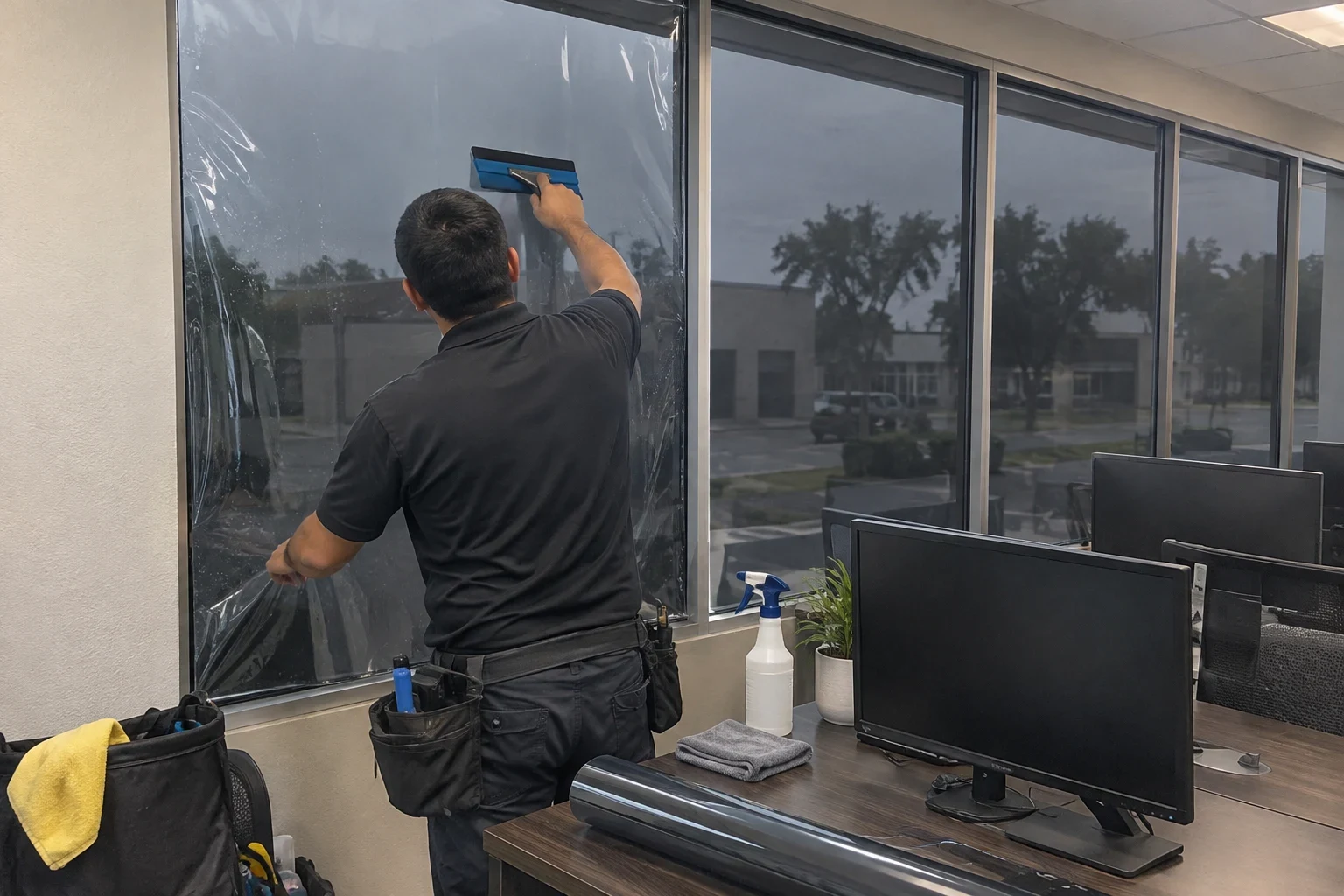
Film that fixes what your staff already notice
Most office calls start with a complaint, not a plan. Someone by the west windows can't read their monitor after lunch. A conference room is too warm by three o'clock. The reception desk faces the parking lot, and everyone walking past can see in. Office window tinting solves those problems with a thin film applied to the inside of your existing glass, so you keep the windows and the view.
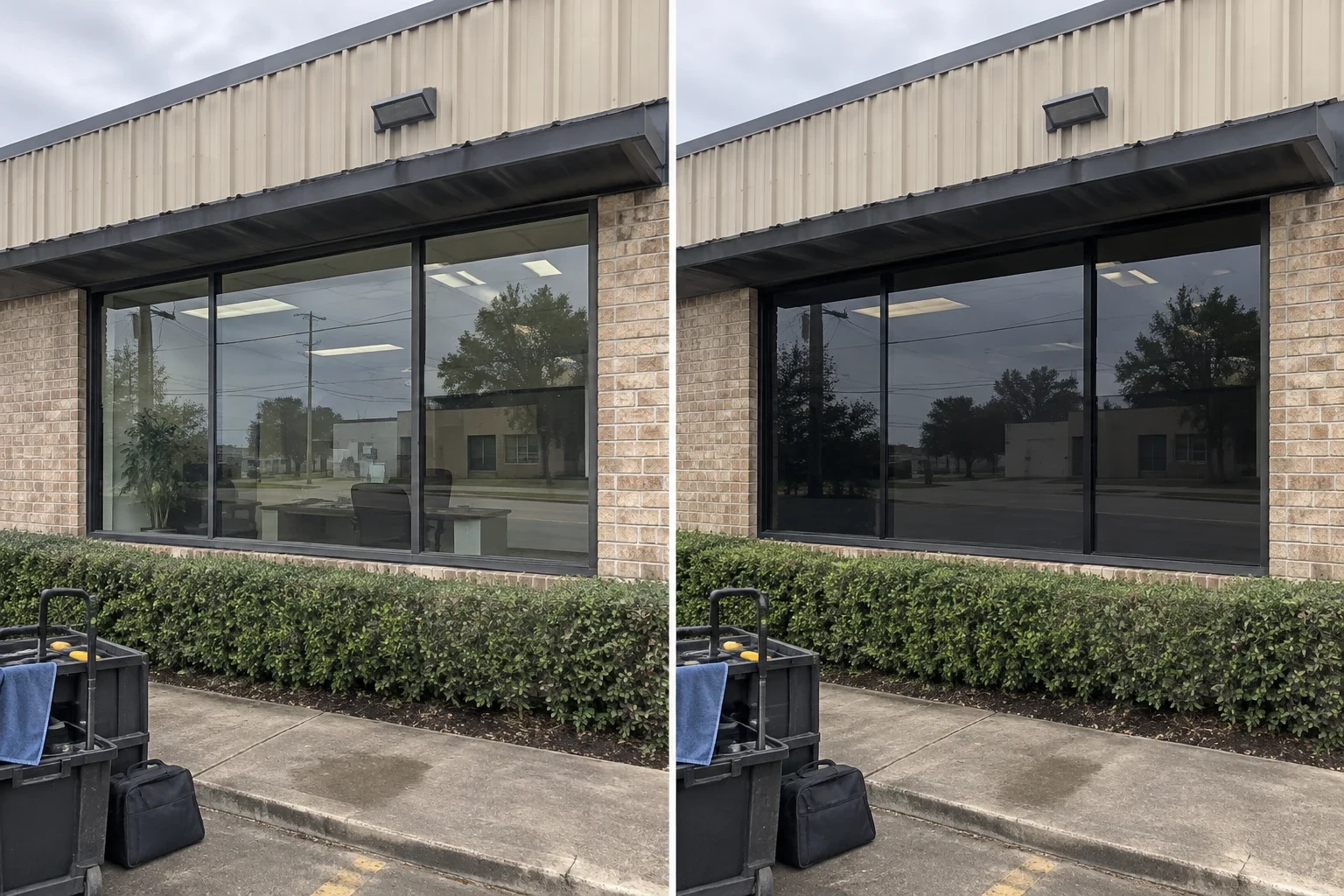
Strong sun arrives early in spring around Deer Park and stays well into fall, and that is when glare and heat gain hit hardest. We match the film to the problem: a ceramic film when heat rejection matters and you want the glass to look nearly clear, a lighter neutral film when glare is the main issue, or a frosted film for rooms that need screening.
You deal with one person throughout. The same person who measures your windows answers your questions, sets the schedule with your office manager and checks the finished glass with you.
What an office tinting job includes
A look at every pane
We note each window's orientation, glass type and frame. Some double-pane and older tinted glass needs a specific film to avoid thermal stress, and we check that before recommending anything.
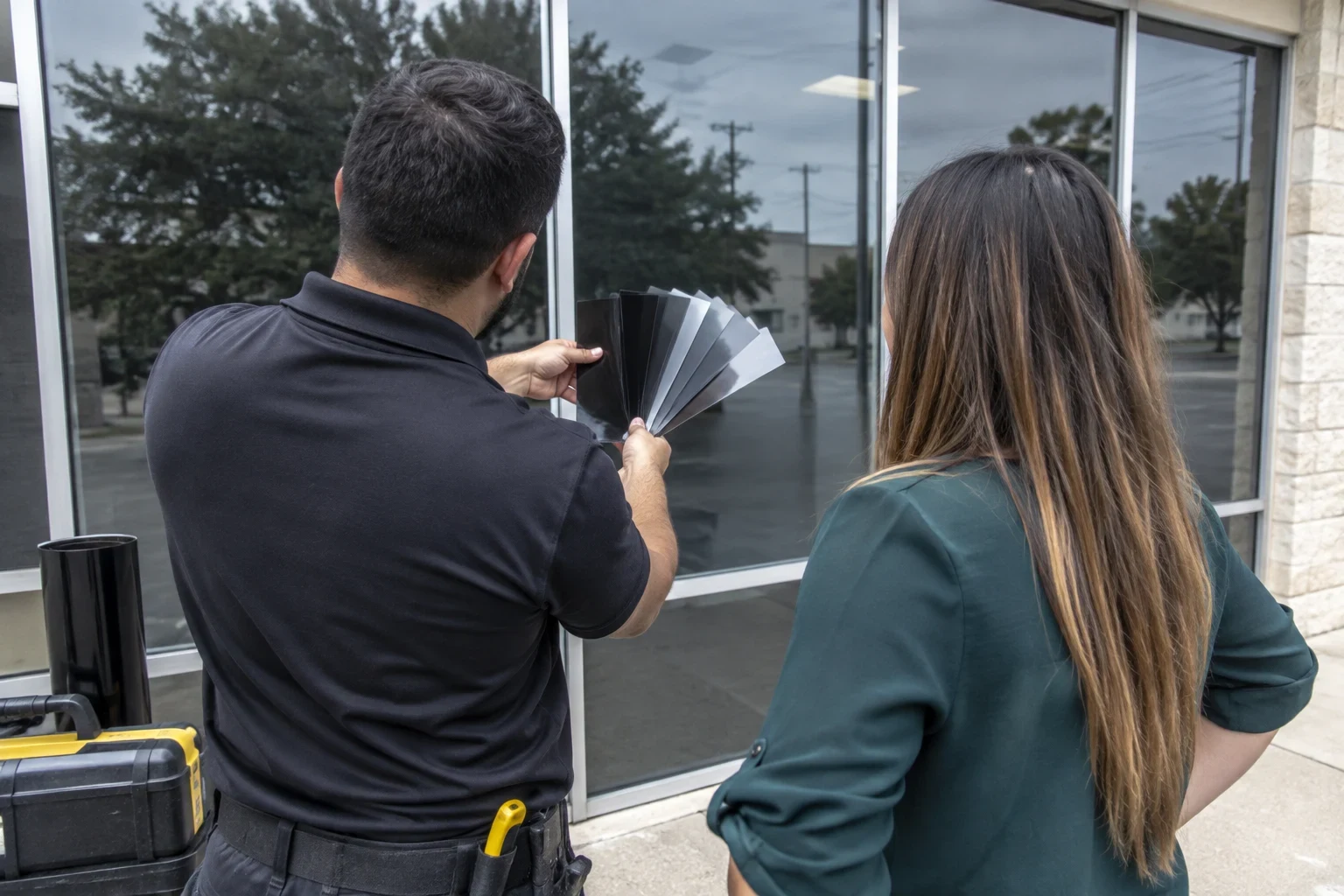
Samples in your own light
We hold film samples on your actual windows so you can judge them from a desk chair and from the sidewalk, at the time of day that bothers you.
A room-by-room written quote
Your quote lists each room or elevation, the film chosen and the square footage. A manager or building owner can see exactly what is being approved.
Protected workstations
Desks, keyboards and flooring near the glass are covered with drop cloths. We move only what we need to and put it back where it was.
A tight, clean finish
Film is trimmed to a narrow, even gap at the gasket, squeegeed flat and the edges pressed down. Glass, sills and frames are wiped before we leave.
Care notes for your cleaners
New film needs time to cure and a soft cloth afterward. We leave a short care sheet to pass along to whoever cleans the windows.
Signs your office is ready for window film
- Blinds stay shut all day
- If staff keep the blinds closed just to see their screens, you are paying for windows nobody uses. Glare reduction film lets you open them again.
- Hot spots along the glass
- Desks by sun-facing windows run noticeably warmer than the rest of the floor. Small fans under desks are a reliable clue.
- Faded carpet and upholstery
- Chairs, carpet and anything pinned near the window lose color over time. Most quality films block the large majority of UV, which slows that fading considerably.
- Too easy to see inside
- Ground-floor offices, glass-walled conference rooms and street-facing reception areas often need daytime privacy without giving up natural light.
- Thermostat disagreements
- One side of the room wants it colder and the other wants it warmer. Uneven solar heat through the glass is often the cause.
How an office install runs
- 1
Phone call and site visit
On the phone we talk through what is bothering your team and set a time to come by. On site we measure, test samples and note anything that affects the work, such as furniture pushed against the glass.
- 2
A plan around your workday
We work room by room so your team can keep working elsewhere. If a quieter time suits your office better, we talk through the options and put the plan in writing.
- 3
Cleaning and application
Each pane is scraped and cleaned, then the film goes on with a slip solution, is squeegeed flat and trimmed. There is no sanding, no strong odor and very little noise.
- 4
Walk-through and curing
We look over the finished glass with you before we pack up. Small water pockets or a light haze are normal while the film cures over the following weeks, and we tell you what to expect and when to call.
What affects the price of office tinting
Every office quote is built from the glass you actually have, so we measure on site rather than guess over the phone. The consultation and written quote are free. These are the things that move the number.
- Square footage and pane count
- Total glass area matters most, but many small panes take more trimming time than a few large ones of the same size.
- Film type
- Ceramic film costs more than standard films because of how it rejects heat while staying clear. Security film is thicker and takes more care to install.
- Height and access
- Upper-floor windows, tall storefront glass and windows blocked by built-in furniture take more setup.
- Old film removal
- Bubbling or peeling film has to come off, along with its adhesive, before new film can go on. That adds labor.
- Scheduling
- Working outside normal office hours can affect the quote. We note it plainly so there are no surprises.
Office window tinting questions
- Will our staff need to leave while you work?
- Usually not. We work one room or section at a time, and people simply move away from the windows we are treating. Phones and meetings can carry on in the rest of the office.
- Will the office feel dark after tinting?
- Not with the right film. Many ceramic and neutral films reject a good share of heat and glare while looking close to clear from inside. We show samples on your glass so you can judge the light level before deciding.
- We lease our space. Can we still add film?
- Many landlords allow it, but check your lease first. We can give your property manager the film specifications and the written quote so they know exactly what is going on the glass. Questions from the landlord come to the same person you have been talking with.
- Does window film actually lower energy bills?
- It reduces the solar heat coming through the glass, so your cooling system works less hard on sunny afternoons. How much you save depends on how much glass you have and which way it faces. We will tell you honestly whether film is likely to make a real difference in your space.
- How should the windows be cleaned afterward?
- Wait until the film has cured, then use a soft cloth or rubber squeegee with a mild, ammonia-free cleaner. Avoid razor blades and abrasive pads on the film side. We leave written care notes for your cleaning crew.
Talk through your office windows with one person
When you call, you speak with the person who will measure, quote and coordinate your job. We set up a free consultation at your office in Deer Park or nearby towns such as Pasadena and La Porte, and you get a written quote to review.