ServicesPrivacy Window Tinting
Privacy Window Tinting in Deer Park
We fit privacy window film to bathroom glass, street-facing rooms and front door sidelights so you can keep the light and lose the view in. One person walks you through film choices, schedules the work and checks the finish with you.
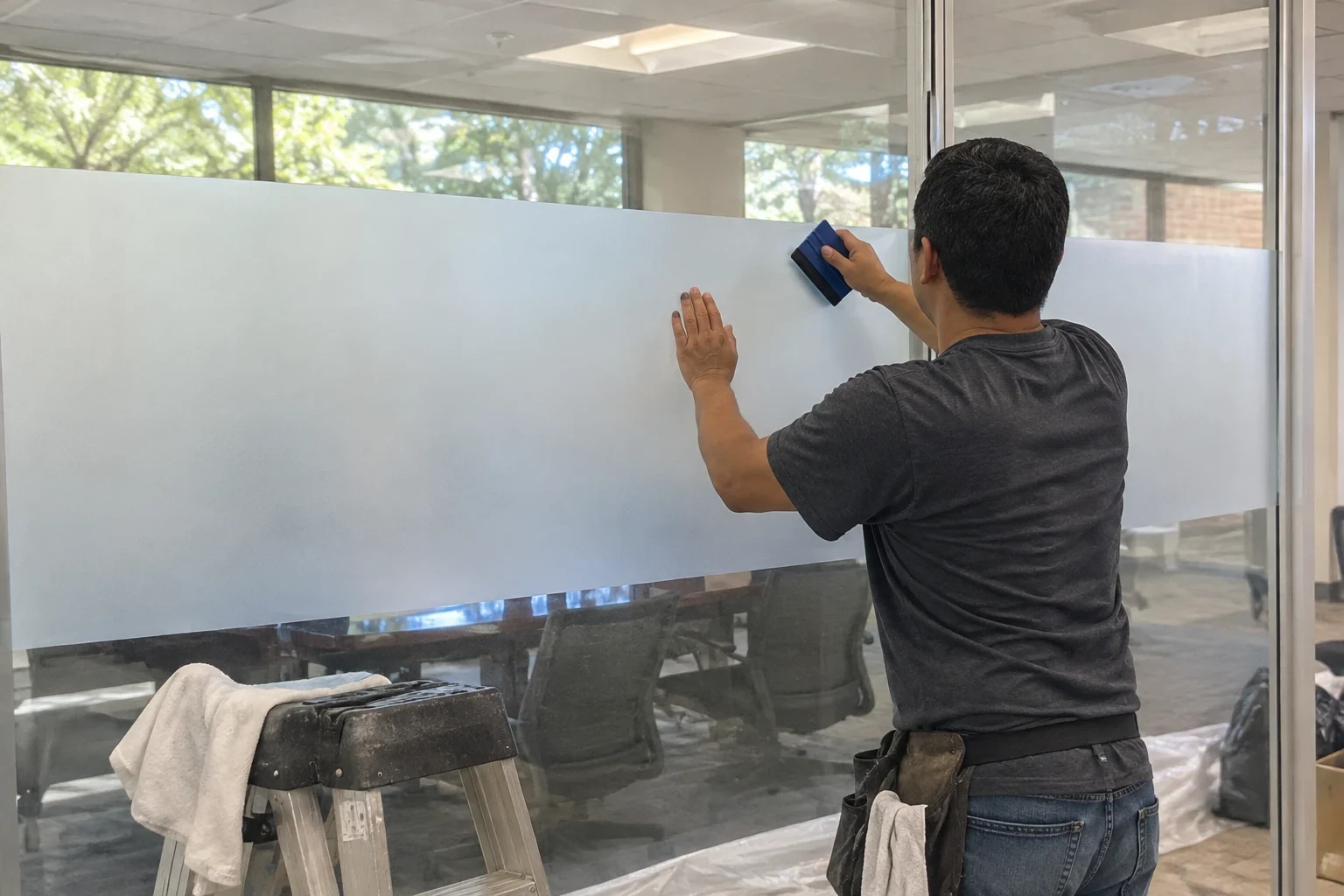
Privacy that matches how you use each room
Privacy film is not one product. Reflective film works like a one-way mirror during the day, because the outside is brighter than the inside. After dark, with your lamps on, that reverses and people can see in. Frosted and etched films blur the view at every hour, day or night, so they suit bathrooms and bedrooms where privacy matters no matter the time.
Many rooms do best with a mix: frosted film on the lower sash of a bathroom window, dual-reflective film on a living room picture window that you want to see out of. We look at each opening and tell you plainly what each film will and will not do, including at night.
Most privacy films also cut glare and block nearly all UV light, which helps protect floors and furniture. If heat is your main concern, our ceramic window film page covers that in more detail.
What the work includes
- A room-by-room film plan
- We note which windows face the street, a neighbor or the backyard, and when you use each room. That decides whether a window gets frosted, reflective or dual-reflective film.
- Samples held to your glass
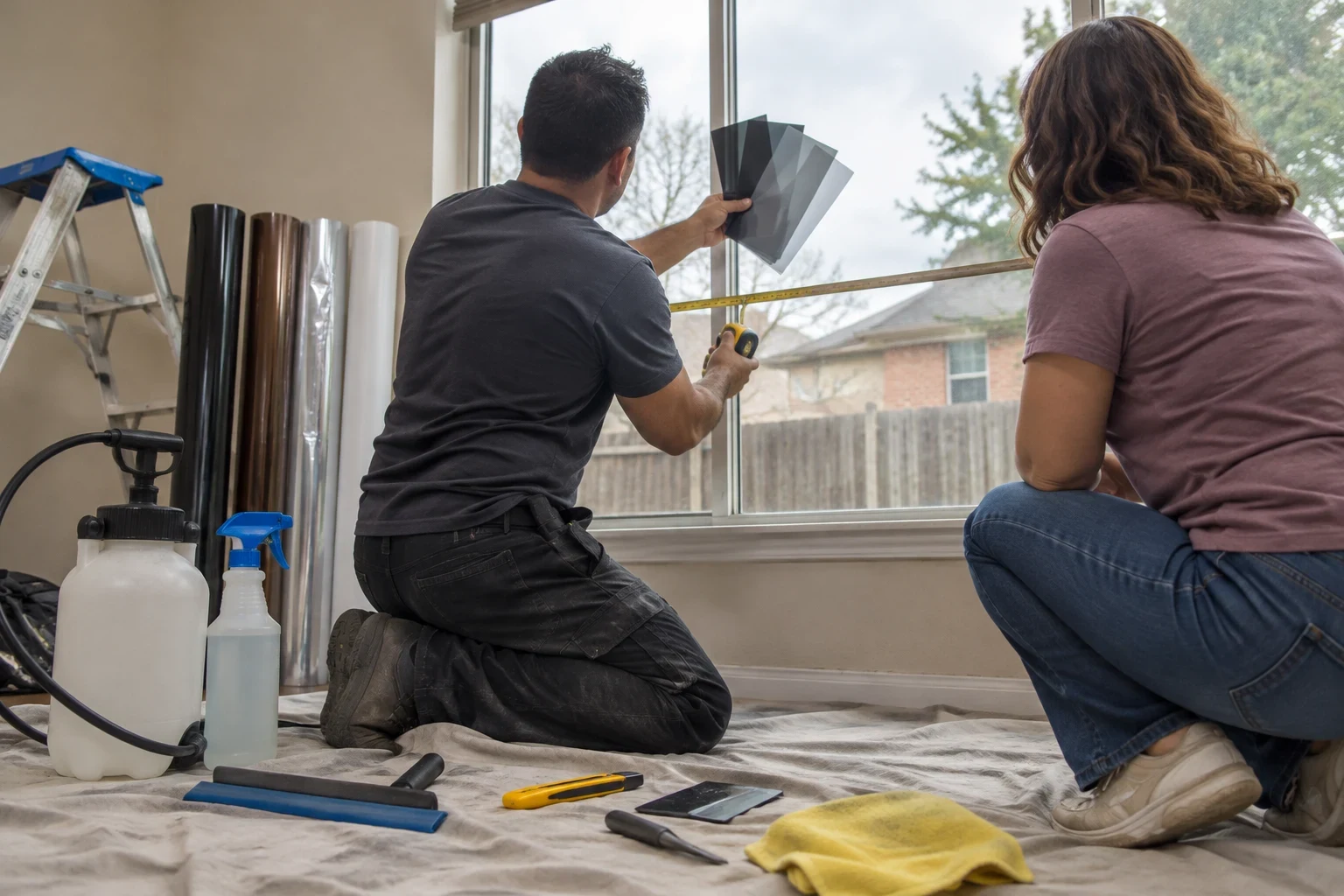
- We bring film samples and hold them to your actual windows. You see the shade, the tint and the view out before anything is ordered.
- A glass check before we commit
- Some double-pane and low-E units are sensitive to heat buildup from darker or mirrored film. We check the glass and recommend a film that is compatible with it.
- Careful prep and a clean edge
- Glass is scraped and cleaned, and film is cut to leave a small, even gap at the frame. Floors and sills are covered while we work.
- Cleanup and a walk-through
- We wipe down the glass, take away every scrap and walk the rooms with you before we leave.
Signs privacy film is the right call
Blinds stay closed all day
If you keep shades down just to stop people seeing in, you are giving up daylight you could have. Film lets the light through and keeps the view out.
A bathroom window faces the street
Frosted film gives full privacy without curtains that collect moisture in a humid bathroom.
Sidelights show your entryway
Clear glass beside the front door lets visitors see straight down the hall. A frosted or decorative film keeps the entry bright but private.
A neighbor's window lines up with yours
Close lot lines are common across the area. Film on just the facing panes can solve it without darkening the whole room.
Glare and privacy are both a problem
Reflective films handle both on a sunny exposure, which is often a simpler answer than two separate fixes.
How a privacy film job runs
- 1
Phone call and consultation
You call, describe the rooms and set a time for us to come look. The person you speak with is the same person who handles your job through to cleanup.
- 2
Visit, samples and written quote
We measure each window, show samples on your glass and explain how each film behaves day and night. You get a written quote listing every window and film.
- 3
Installation day
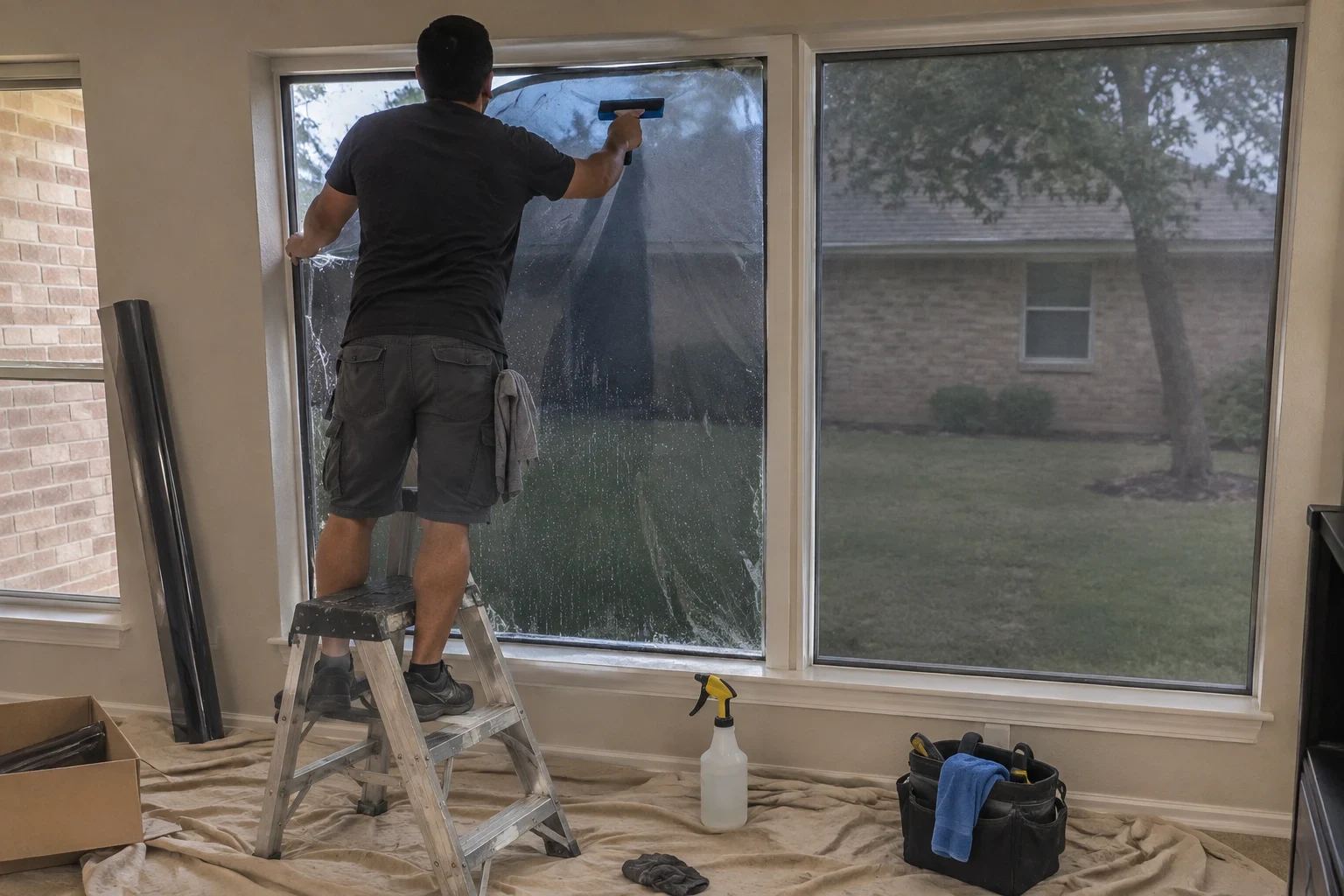
Most homes take a few hours to a day. We cover the floor below each window, clean the glass, apply the film with a slip solution and squeegee out the water.
- 4
Curing and follow-up
For the first days, and sometimes a few weeks, the film may carry a faint cloudiness or tiny trapped droplets as the last moisture dries out. Cool or damp spells stretch that out. It is part of normal curing, and we explain what to watch for and when to give us a call if anything still looks wrong.
What moves the price
Privacy film is priced by the window and the film, so two homes with the same number of rooms can come out quite differently. We list each opening and film on the quote, so you can see exactly where the cost comes from and drop or add windows as you like.
- Film type
- Frosted, reflective, dual-reflective and patterned films carry different material costs. Mixing types across rooms is common and fine.
- Glass area and shape
- Large panes, arched tops and divided-light windows take more film and more cutting time than a plain rectangle.
- Access
- Second-story stairwell windows and transoms over doors need ladders or scaffolding and more careful setup.
- Removing old film
- Faded or bubbling film needs to come off first. We peel it, then work the leftover glue off the glass so the new layer bonds to a clean surface, and that extra labor shows on the quote.
Privacy window tinting questions
Something not covered here? (281) 645-5513
Will people be able to see in at night?
With reflective film, yes. After sunset, when your rooms are lit and the yard is dark, the mirror effect flips and the view runs from outside in. If you need privacy in the evening, frosted film or reflective film paired with blinds for nighttime is the honest answer.
Can I still see out?
With reflective and dual-reflective film, you can see out clearly during the day. Frosted film blurs the view both ways, which is why we usually suggest it for bathrooms and lower panes rather than main living room windows.
Is privacy film safe on double-pane windows?
Usually, but not every film suits every glass. Darker and mirrored films absorb more heat, which can stress some insulated units. We check your glass type before recommending a film and will steer you to a compatible option.
Can I clean the windows normally afterward?
After the film has cured, yes. Use a soft cloth or rubber squeegee and a cleaner without ammonia, and avoid razor blades or scrub pads on the film side.
Can the film come off later if we move or change our minds?
Yes. Window film can be removed, and we can take it off and clean the adhesive from the glass if you want a different look in a few years.
Ready to keep the light and lose the view in
Tell us which rooms feel exposed and we will come out, show you samples on your own glass and give you a written quote. One person stays with your job from that first call until the last window is wiped clean.