ServicesDecorative Window Tinting
Decorative Window Tinting in Deer Park
We apply frosted, etched-look and patterned window film to the glass you want to soften or screen. It changes how a room feels without new windows. One person walks you through samples, schedules the install and checks the finish with you before we leave.
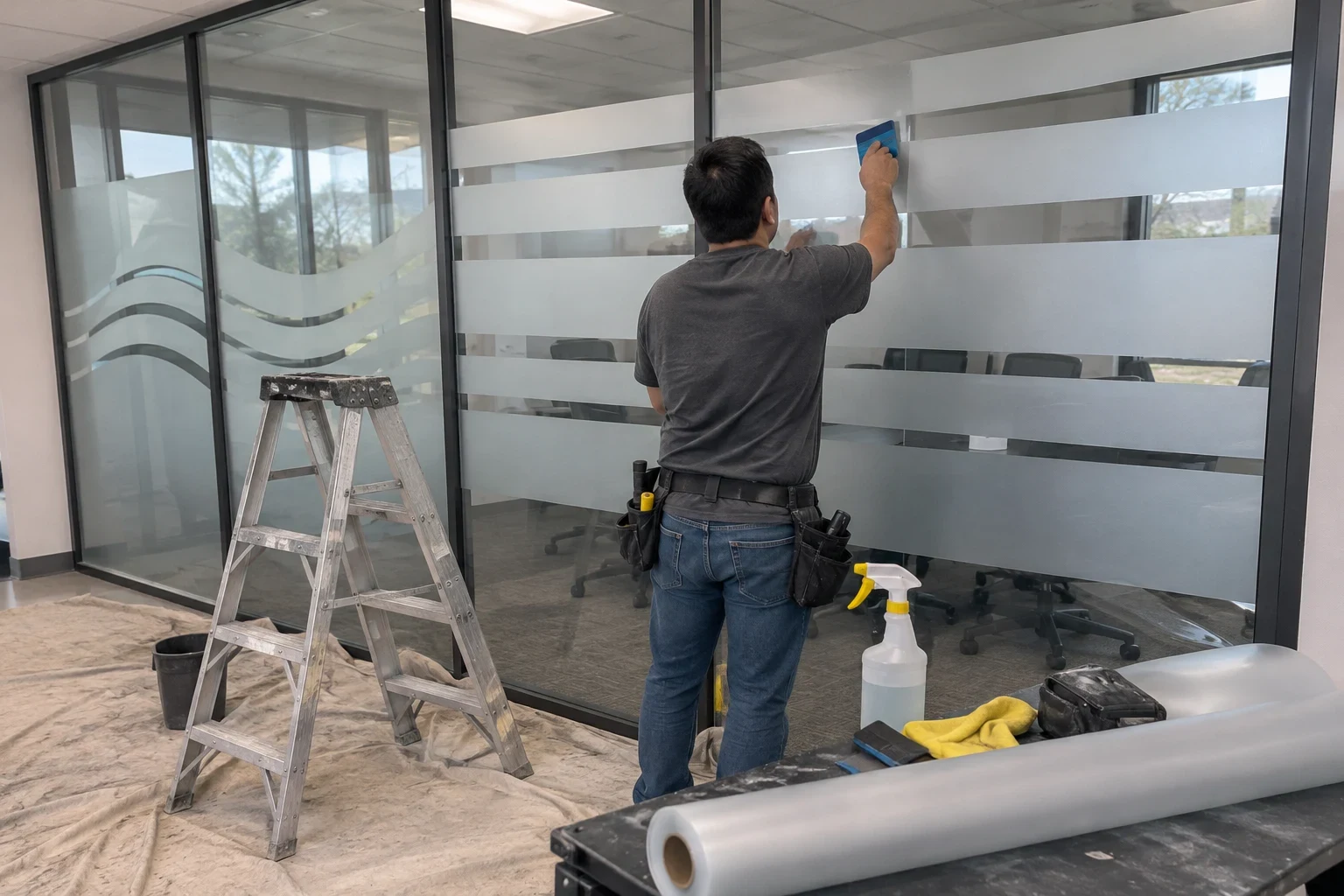
Privacy and Style on the Glass You Already Have
Decorative film is a thin polyester layer with a printed, frosted or textured finish, applied to the inside face of the glass. It can look like acid-etched glass, a soft gradient or a pattern of lines and dots. Light still comes through. What changes is how much anyone can see.
It is the right call when a window is in the wrong place for privacy: a bathroom window facing the neighbor's yard, sidelights beside the front door, a glass shower enclosure or a French door into a home office. Frosted film screens the view day and night, which reflective film cannot do once the lights come on inside.
The same person you speak with on the first call is the one who measures, orders and checks the finished glass. You will not be passed between a salesperson, a scheduler and an installer who has never heard your plans.
What the Work Includes
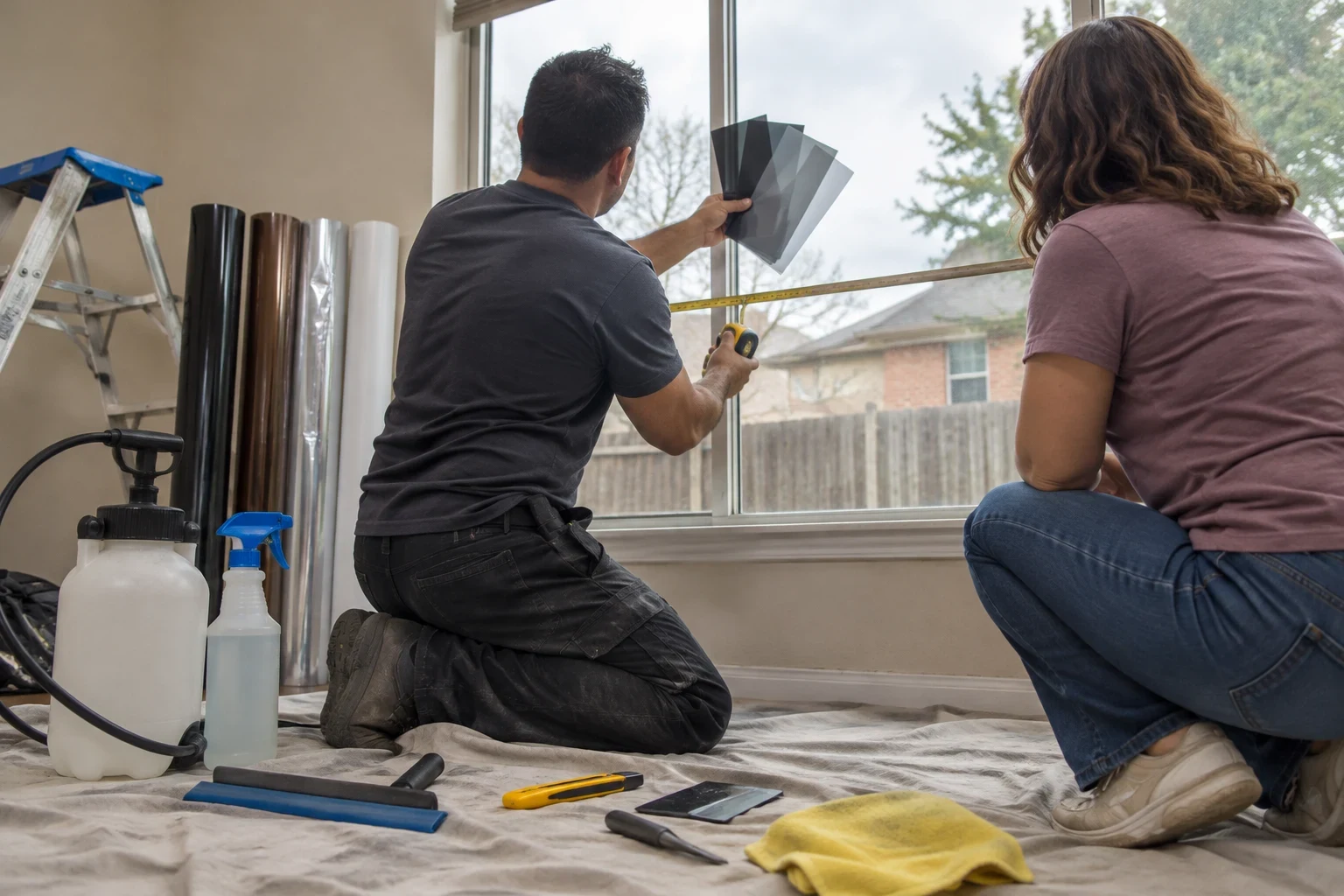
- Samples held to your glass
- We bring swatches of frosted, gradient and patterned films and hold them against your actual windows. Seeing a film in your own light is the only fair way to choose one.
- Measuring and layout
- Every pane is measured individually. For bands and gradients we mark the height on the glass first so you can see where the screening will sit before anything is cut.
- Glass preparation
- We clean each pane, scrape off paint flecks and old residue, and clear the edges. Film shows every speck trapped underneath, so this step takes real time.
- Installation and edge trim
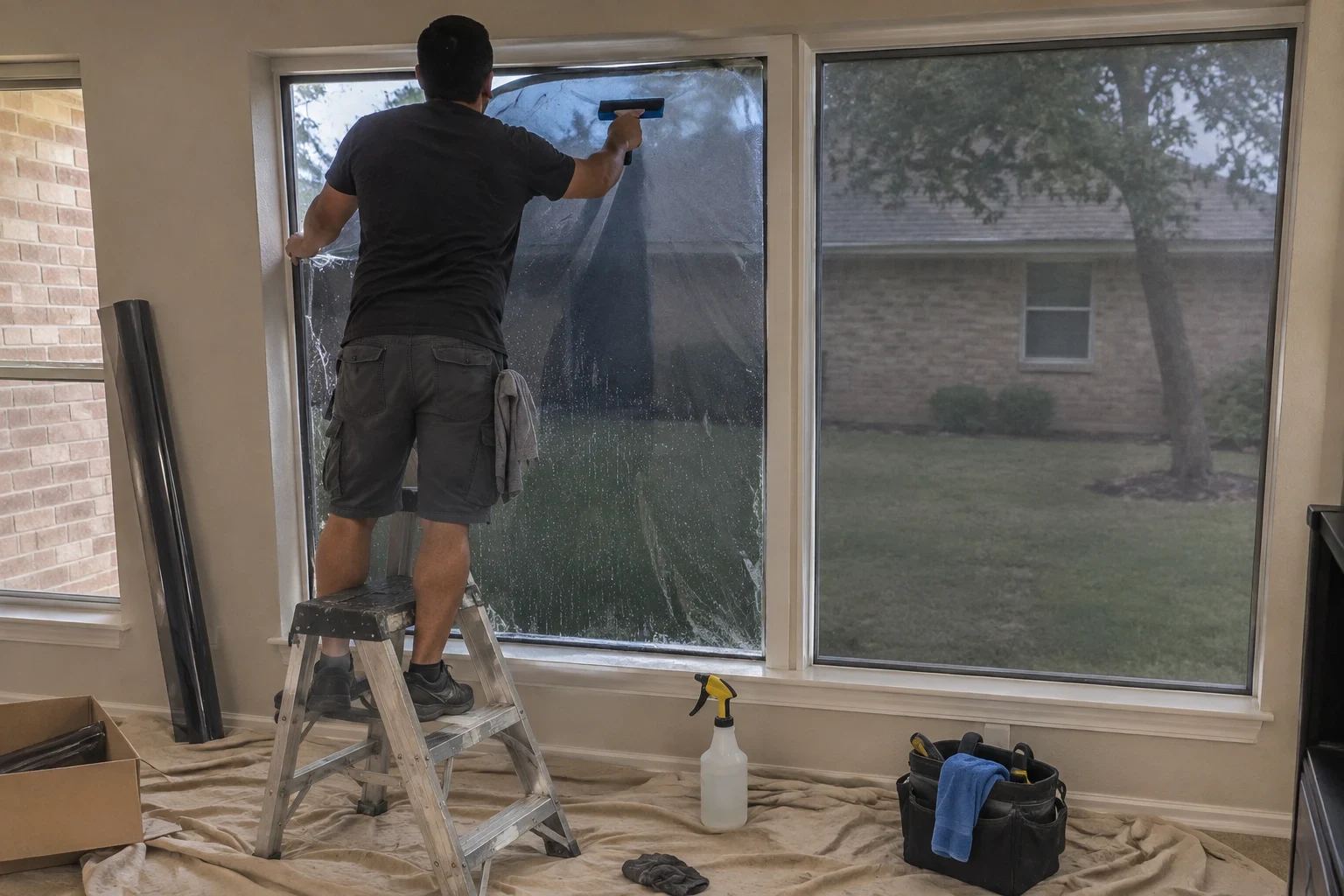
- The film goes on with a slip solution, is squeegeed flat and trimmed just shy of the frame so it does not lift at the gasket.
- Cleanup and walkthrough
- We protect sills and floors with drop cloths, wipe down the glass and frames, and walk the rooms with you to check every pane.
When Decorative Film Makes Sense
Shades kept down all day
A bathroom or street-side window that never gets uncovered is losing its daylight for nothing. Frosted film screens the view so the shade can stay up.
A front door that shows the hallway
Clear glass beside the entry gives anyone on the porch a direct look inside. Patterned or frosted film blocks that line of sight and still brightens the foyer.
Glass that looks tired
An etched look or a simple pattern can update a transom, cabinet door or interior glass panel at a fraction of what new glass would cost.
Glass partitions with no privacy
Glass doors and conference walls, at home or in a business, can take a frosted strip at eye level. People get a measure of privacy and the space keeps its natural light.
Fabric fading near a window
Many decorative films also block UV, which slows fading on curtains, rugs and flooring close to the glass.
What Shapes the Price
Decorative film is priced by the window, the amount of glass and the film you choose. We list each pane on the written quote so you can see exactly where the cost sits and drop a window if you want to.
Square footage
More glass means more film and more labor. A pair of sidelights costs less than a wall of patio doors.
Film style
Plain frosted film is the simplest. Gradients, printed patterns and custom cut designs take more material and more time to align.
Access and pane shape
Tall transoms, arched tops and glass above a tub need ladders or careful trimming, which adds time.
Removing old film
Peeling, bubbled film has to come off and the adhesive has to be cleaned before new film goes on.
How the Job Runs
- 1
Consultation by phone
You tell us which windows bother you and why. We talk through film styles and set a time to bring samples.
- 2
Samples and quote
At your home we look at the glass, measure, and leave you a written quote that lists each window and the film chosen.
- 3
Installation day
Most homes take a few hours. We work room by room, so you only need to clear the sills and give us access to the glass.
- 4
Curing and follow-up
Small hazy spots and water pockets are normal for the first days and fade as the film dries, which can take a little longer in Gulf Coast humidity. Wait about a week before cleaning the glass, and call the same number if anything looks off.
Questions About Decorative Film
Can people see in at night with frosted film?
No. Frosted and etched-look films diffuse light going both ways, so at most someone outside sees a soft shadow, never detail. Reflective film works differently: it only hides the room while the outdoors is brighter than the inside.
Will it work on textured or rain glass?
The adhesive needs a flat, even face to hold. Plenty of patterned panes are textured on one side and flat on the other, and in that case we put the film on the flat face. If both faces are textured, we will say so during the consultation instead of installing film that would peel.
Can the film be removed later?
Yes. It lifts away without damaging the pane, and any leftover adhesive comes off with the proper solution. Renters and anyone who expects to change the look in a few years tend to like that.
Does decorative film help with heat?
Somewhat, because it blocks part of the incoming sunlight. Its real job is privacy and appearance, though. If heat rejection is the goal, ceramic window film is the better fit, and we can plan both for the same visit.
How do I clean it?
Give the film its first week to dry, then wipe it with a soft cloth and a gentle cleaner that contains no ammonia. Keep razor blades and scrubbing pads away from the filmed side.
Talk Through Patterns With One Person
Tell us which windows you want to soften or screen. The person who answers will plan the job, bring the samples and see it through to cleanup.