ServicesNon-Reflective Window Film
Non-Reflective Window Film in Deer Park
If you want cooler rooms and less glare but not a mirrored facade, non-reflective window film is the quieter choice. It looks close to clear glass from outside, keeps your view natural at night, and one person handles your job from the first question to the final wipe-down.
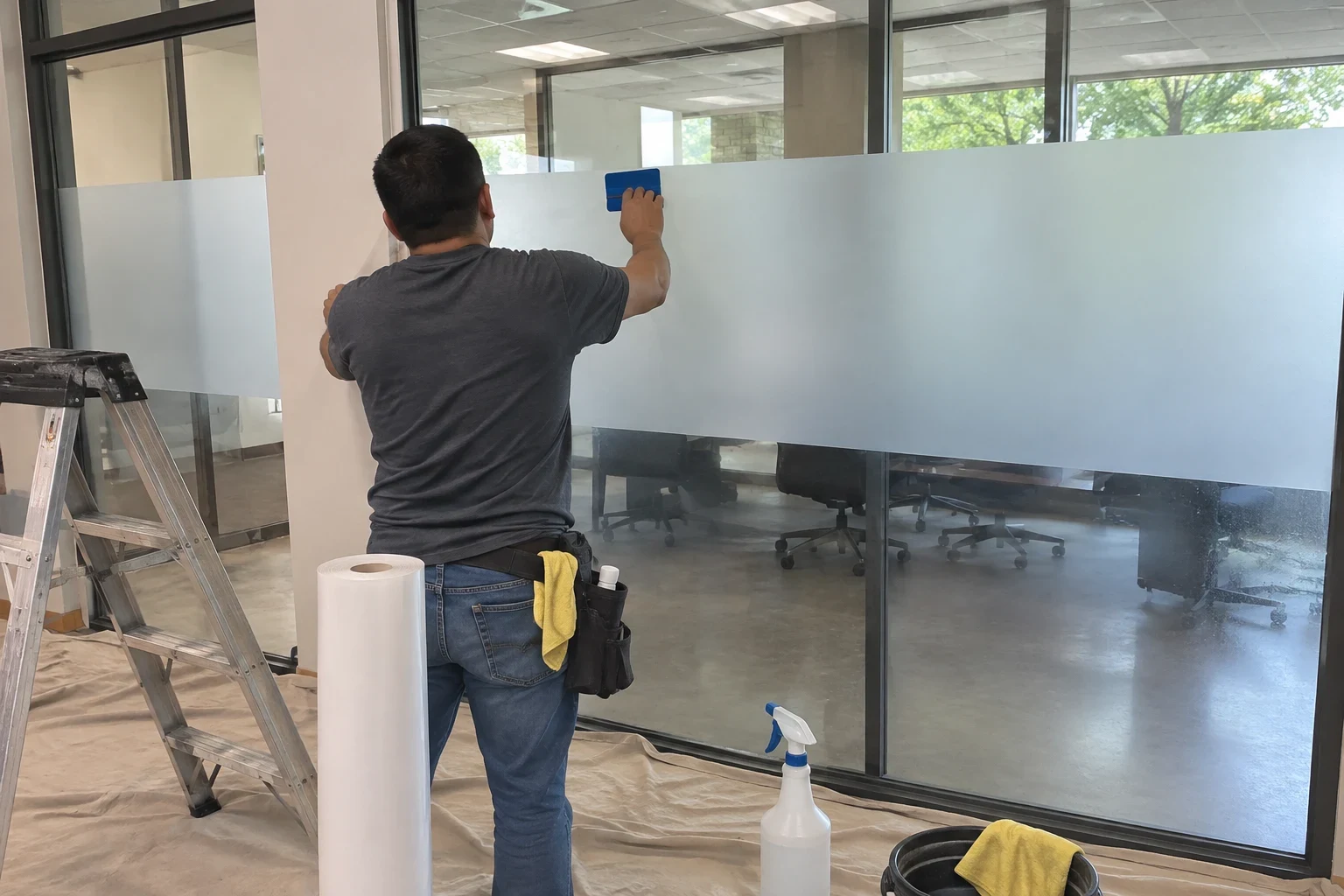
Performance you feel, a finish you barely notice
Most heat-control films work by bouncing sunlight away, which gives glass a silver or bronze shine. Non-reflective film takes a different route. It uses ceramic or carbon layers that absorb and block infrared heat and nearly all UV, so the glass keeps roughly the look it had before.
That matters if your home has a traditional facade, if an HOA frowns on mirrored windows, or if you simply dislike seeing your own reflection in the living room after dark. Reflective film turns into a mirror on the inside at night. Non-reflective film does not, so you can still see out to the yard.
The tradeoff is honest and worth knowing. At the same darkness, a reflective film usually rejects a bit more heat. We will show you both on your own glass and tell you plainly which fits the room. If maximum heat rejection is the goal, our Reflective Window Film page explains the other side.
What the work includes
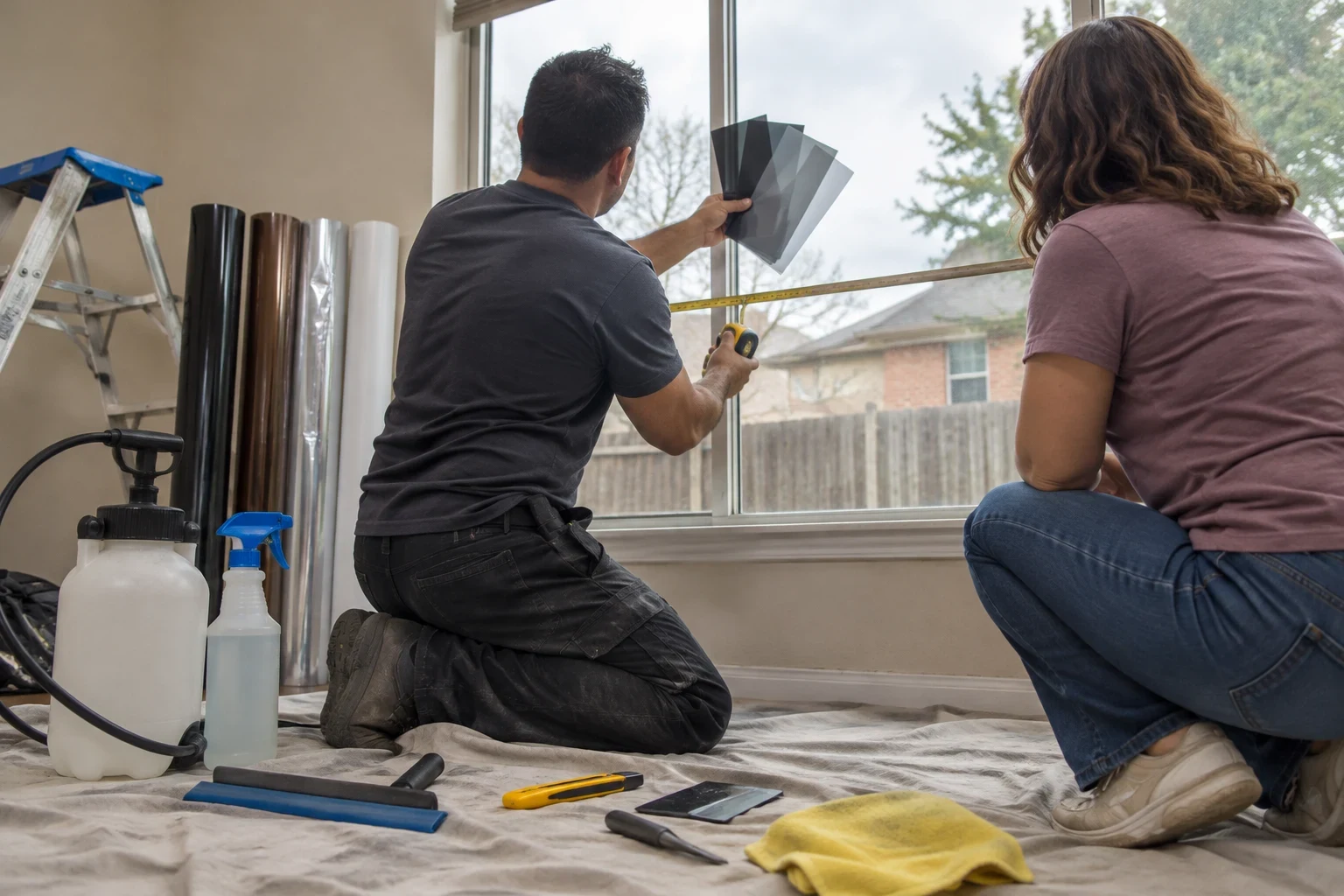
- Samples on your actual windows
- We bring film samples and hold them against your glass in the light you live with. Color shift and darkness look different on a west window at four in the afternoon than in a brochure.
- A glass compatibility check
- Dual-pane, low-E and tempered glass each react differently to absorbed heat. We check the type and size of each pane so the film we suggest will not put the seal or the glass under stress.
- Removal of old film
- Peeling, purple or bubbled film comes off first, along with the adhesive left behind. Clean glass is the only way the new layer lies flat and clear.
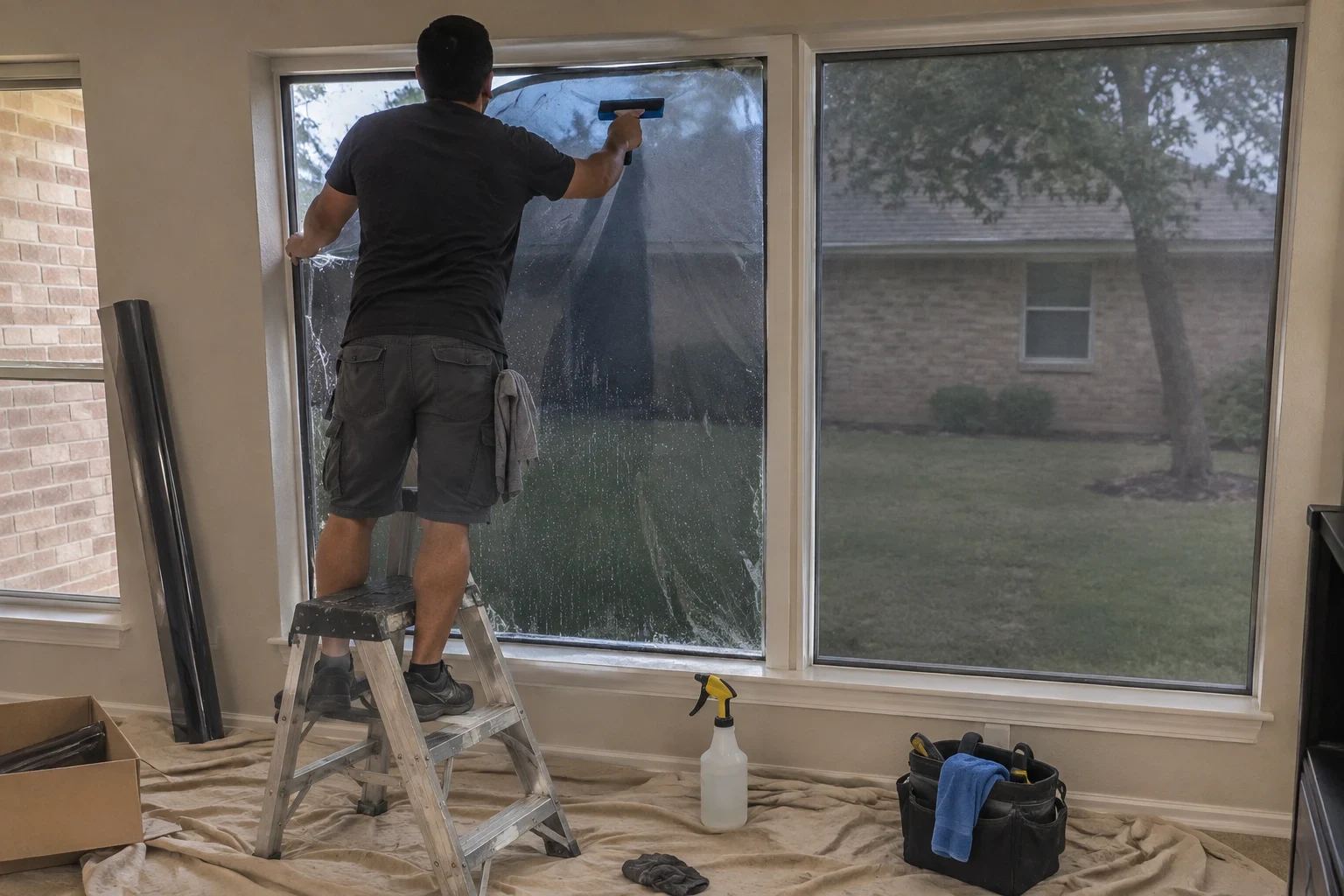
- Careful wet installation
- Each pane is cleaned, the film is floated on with a slip solution and squeegeed out, then trimmed with a fine, even gap at the edges. Sills, floors and furniture near the window are covered while we work.
- Cleanup and care notes
- We wipe down the glass and frames, take every scrap with us, and leave simple instructions for the curing period and long-term cleaning.
Signs non-reflective film is the right call
Afternoon sun makes a room unusable
Blinds stay shut, the air conditioner runs hard and the couch is too warm to sit on. Film cuts the heat at the glass, so you can open the blinds again.
You want the house to look unchanged
Some owners care how the front elevation reads from the street. Non-reflective film keeps glass looking like glass, which suits brick, stone and older styles.
Your HOA restricts mirrored windows
Many associations limit reflective finishes. A low-reflectivity film is often the way to get heat and UV control while staying within the rules, though you should confirm with your HOA.
Floors and fabrics are fading
Wood, rugs and upholstery near a sunny window lose color over time. The film blocks almost all UV, one of the main causes of that fading.
Screens and TVs wash out with glare
Glare reduction is often the first thing people notice. You keep daylight without squinting at a monitor.
What shapes the price
Every estimate is built window by window, so you see what each part costs. The film itself is only one piece. Size, access and the condition of the glass matter just as much.
Total glass area and pane count
More square footage means more film and more time. Many small divided panes take longer than one large picture window of the same area.
Film grade
Ceramic non-reflective films cost more than basic dyed or carbon films, but they hold their color and reject more heat. Our Ceramic Window Film page goes deeper on that choice.
Access and height
Tall foyer windows, transoms and panes behind built-ins need ladders, staging or extra care.
Old film removal
Stripping failed film and baked-on adhesive is slow, careful work, and it is priced separately so you can see it.
How a job runs, start to finish
- 1
A phone conversation
You call and talk with the same person who will coordinate your job. We ask which rooms bother you and when, and set a time to visit.
- 2
An in-home consultation
We measure, check the glass and show samples on your windows. You get a written estimate that lists each window and the film for it.
- 3
Installation day
We arrive at the agreed time, move what needs moving and protect the area. Most homes are finished in a day, and you can stay in the house the whole time.
- 4
Drying time and a last look together
Before we leave, we go window by window with you so you can see the finished work. For the first days or weeks the film may look slightly cloudy or hold tiny beads of moisture as it dries, and humid stretches can slow that down. If something still looks wrong once it settles, you call the same person you have dealt with all along.
Questions about non-reflective film
Will non-reflective film make my rooms dark?
Only if you pick one of the deeper tints. Lighter non-reflective films can block a large share of heat and nearly all UV while letting most daylight through. We hold a few options side by side on your glass so you can judge the brightness for yourself.
Does it keep a room as cool as reflective film?
Usually a little less at the same darkness, because it absorbs heat rather than bouncing it away. A good ceramic non-reflective film narrows that gap considerably. If the difference matters for a particular room, we will tell you so during the consultation.
Can I still see outside at night?
Yes. Reflective films mirror the inside of a lit room after dark, which blocks the view out. Non-reflective film keeps the glass clear in both directions, much like untreated windows.
Can it go on insulated or low-E glass?
Usually it can, as long as the film suits the glass it goes on. Because absorbing films warm the pane, we look at the glass type, the size of each pane and how much sun it takes before we suggest anything. When a window is a poor fit, we tell you and leave it untreated.
How do I clean the windows afterward?
Wait until the film has fully cured, then use a soft cloth or rubber squeegee with a mild, ammonia-free cleaner. Avoid razor blades and abrasive pads on the filmed side. That is all the care it needs.
See it on your own glass
We bring samples to your windows, answer your questions in person and put the estimate in writing. The same person stays with your job through cleanup.