ServicesSecurity Window Film
Security Window Film in Deer Park
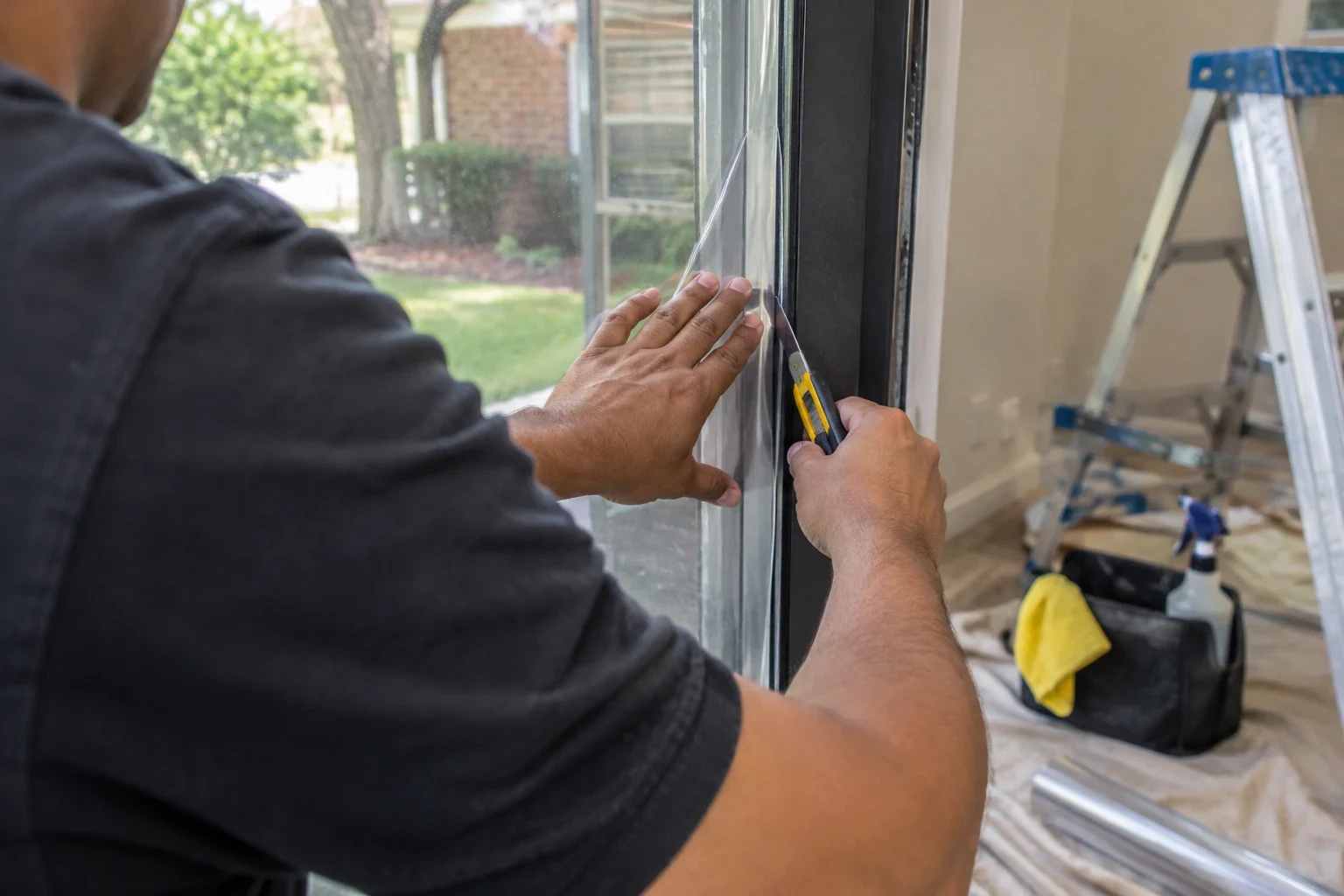
Security window film is a heavy, clear sheet bonded to the room side of your glass. If a pane is struck, the broken pieces stay stuck to the film rather than landing on your floor, and anyone forcing their way in has to keep working, loudly. We install it carefully in homes and offices.
What security film does, and what it doesn't
Ordinary tint film is thin, often around 2 mil. Security film is far heavier, commonly 7 to 14 mil, built from layered polyester with a strong adhesive. It will not make glass unbreakable, and we won't tell you it does. What it does is hold a broken pane together in the frame, so a quick smash-and-reach becomes slow, loud work, and a cracked window doesn't scatter glass across the floor.
It is the right call for glass that sits close to a lock, ground-floor windows out of view, sliding patio doors and storefront panes. Many Deer Park clients also ask about it before Gulf Coast storm season, since film helps keep shards in place if debris hits a window. It supports shutters and good planning; it doesn't replace them.
One person handles your job from the first call through cleanup. The same contact who looks at your windows answers your questions, sets the install day and checks the finished glass with you.
What the work includes
- Film matched to the risk
- A sidelight next to a deadbolt needs a different thickness than a high bathroom window. We recommend film by location and purpose, not one product for every pane.
- Clear or solar-control options
- Security film can be fully clear, or it can carry heat rejection and UV protection as well. If you also want cooler rooms, we can show you combined options alongside our ceramic window film.
- Edge attachment for higher-risk glass
- On doors and large panes, we can anchor the film to the frame with a bead of structural silicone. This keeps the whole sheet of glass from being pushed in as one piece, which is the weak point of film alone.
- A check of your glass first
- We look at pane size, glass type and the condition of double-pane seals before quoting. Some heavy films are not suited to certain dual-pane units, and we would rather tell you that up front.
- Protected rooms and a clean finish
- Floors and sills get covered, furniture is moved with care and put back, and offcuts leave with us. You get clean glass with edges trimmed close and even.
Signs security film belongs on your list
Glass within reach of a lock
Sidelights, door glass and the panes beside a lever handle are the first places someone tries. Film there buys time and noise.
Windows hidden from the street
Back and side windows behind fences or shrubs give an intruder privacy to work. Those are worth treating first.
Large panes near kids or pets
A sliding door or floor-level window that breaks can leave sharp pieces where people walk. Film keeps the fragments stuck together.
Storm season planning
If wind-blown debris worries you, film adds a layer of protection against glass spraying into the room.
Storefront or office glass after hours
Businesses with street-facing glass often pair security film with commercial window tinting so one visit covers both.
How a security film job runs
- 1
A consultation by phone
You tell us which windows concern you and why. We talk through what film can and can't do, and set a time to see the glass.
- 2
A look at the windows and a written estimate
We measure each pane, check frames and seals, and give you a line-item estimate showing film type and any edge attachment per window.
- 3
Install day
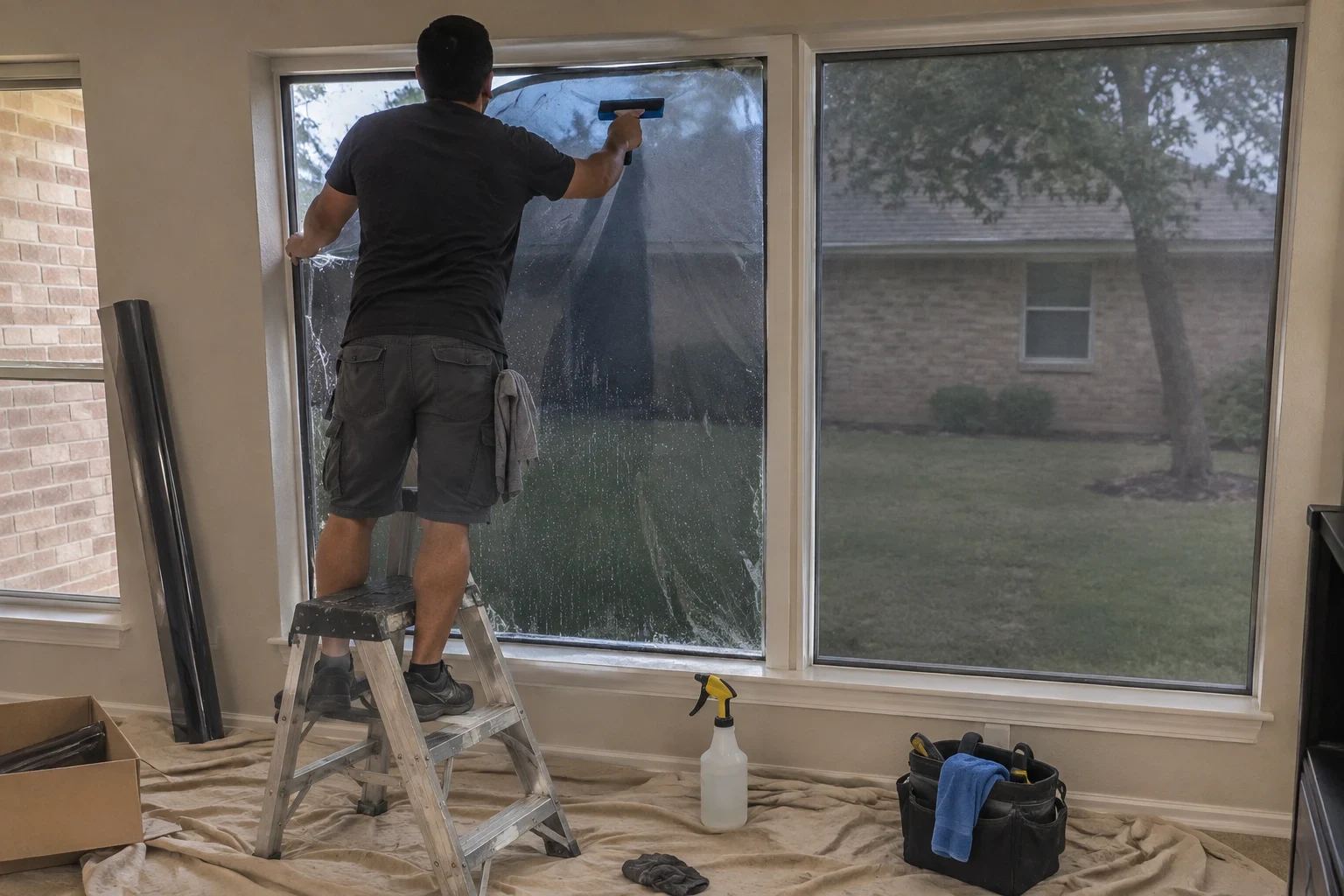
Glass is scraped and cleaned, film is cut to size, wet-applied and squeegeed firmly from the center out. A typical room takes a few hours, and you can stay home while we work.
- 4
Curing and a final walk-through
Because security film is thick, it holds moisture longer, so a faint cloudiness or a few small damp spots can linger for several weeks before the film dries clear. Your contact goes over each window with you and explains how that settles.
What moves the price
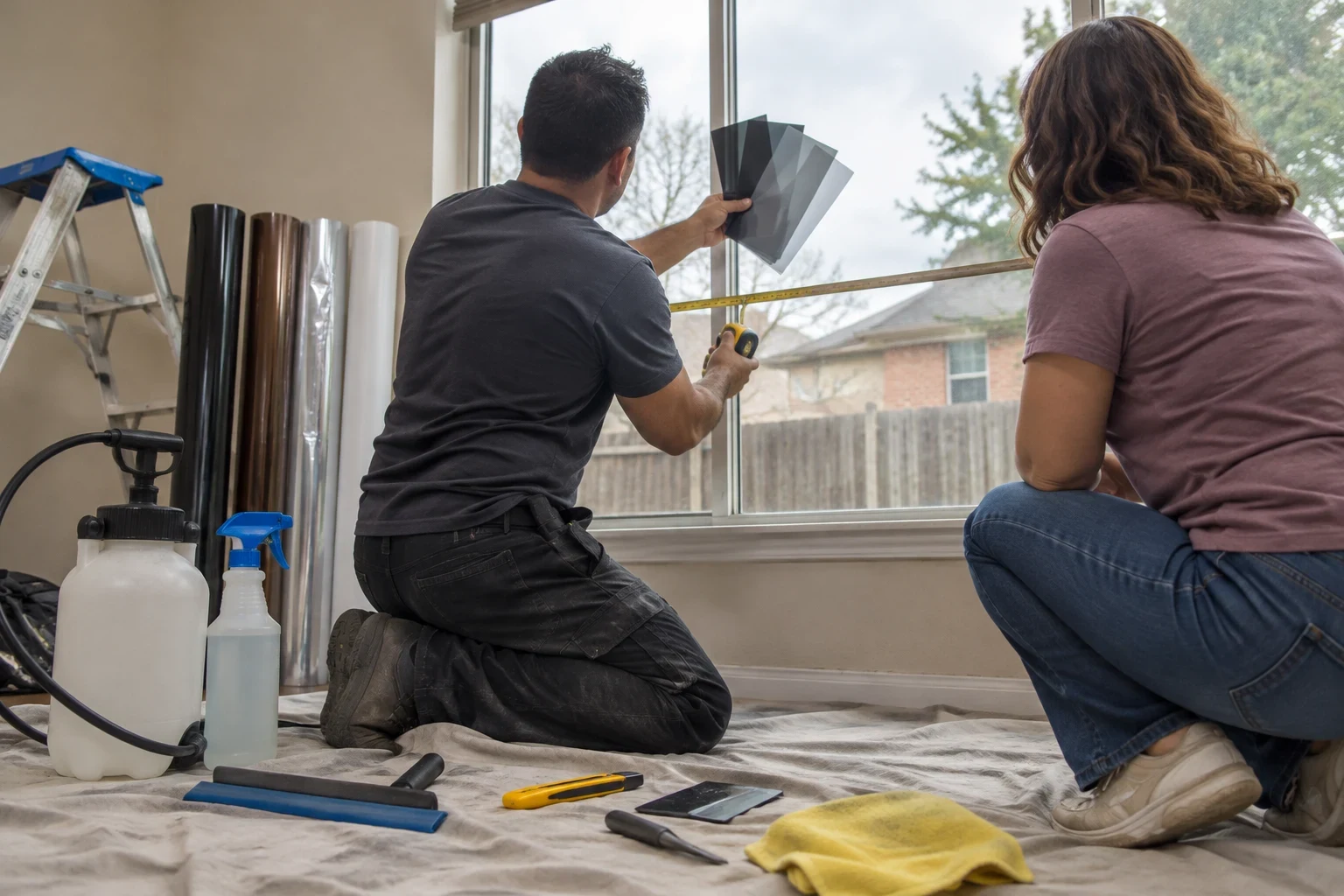
Security film costs more per window than standard tint because the material is heavier and the install is slower. Your estimate lists each window separately, so you can treat the most exposed glass now and add more later.
- Film thickness
- Heavier film costs more and takes more care to install. We match thickness to the window instead of using the thickest film everywhere.
- Edge attachment
- Tying the film into the frame with structural silicone means extra material and more time at each pane. For that reason we recommend it mainly on doors and large glass, where it does the most good.
- Amount and size of glass
- Total square footage drives most of the cost, along with how many separate panes need cutting.
- Access and old film
- Second-story glass, tall transoms and heavy furniture add time. Removing old, baked-on film before installing new film does too.
Questions about security window film
Something not covered here? (281) 645-5513
Will security film stop someone from breaking in?
It won't make a window unbreakable. It holds the glass together after it cracks, which forces an intruder to keep striking and pulling at the pane. That delay and noise is often enough to make them give up. Paired with good locks and lighting, it closes off one of the easiest ways in.
Does security film make my windows darker?
Not unless you want it to. Clear security film is very hard to notice once cured. If you'd like heat rejection or more privacy too, there are tinted versions, and we can show samples on your own glass.
Is it a replacement for hurricane shutters?
No. Film helps keep shards from spraying into a room if something strikes the window, but it is not a substitute for shutters or impact-rated windows. We see it as one layer of protection, and we'll say so plainly during the consultation.
Can it go on double-pane windows?
Usually, yes, but not always. Heavy film can raise heat stress on some dual-pane glass, so we check the glass type and the film maker's guidance before recommending a product. If a pane isn't a good candidate, we'll tell you.
When can I clean the windows?
Give the film about 30 days to cure before washing the treated side. After that, a soft cloth and a mild, ammonia-free cleaner keep it clear. Avoid razor blades and abrasive pads on the filmed surface.
Start with the windows that worry you most
Tell us which doors and panes feel exposed. The same person you speak with will see the glass, write up the estimate and be there on install day.