ServicesCommercial Window Tinting
Commercial Window Tinting in Deer Park
We install window film on storefronts, showrooms and commercial buildings to cut heat gain, tame glare and slow UV fading. One person scopes the glass, plans the install around your hours and stays your contact until the last pane is cleaned.
When Commercial Film Is the Right Call
Large panes of clear glass let in daylight, and they also let in heat, glare and UV. On a sunny afternoon a west-facing storefront can turn the front of a shop into the warmest spot in the building, strain the air conditioning and push customers to the back. Commercial window tinting adds a thin film to the glass you already have, so you keep the view and lose much of the heat.
It makes sense when staff complain about screen glare, when displays near the window are fading, or when cooling bills climb every summer. Film is also a practical way to give a business a uniform look across mismatched windows without replacing glass.
With a long cooling season on the Gulf Coast, the payoff shows up in comfort first and in energy savings over time. We help you choose the film and plan the work, and the same person you met at the estimate answers your questions through cleanup.
What the Work Includes
- A walkthrough of every elevation
- We look at each side of the building, note which panes take direct sun and when, and check glass type and condition. Some insulated or heat-strengthened glass needs a specific film to avoid thermal stress, so we check before recommending anything.
- Film matched to the goal
- Ceramic film rejects heat while keeping glass clear. Reflective film adds daytime privacy and strong heat rejection. Non-reflective film keeps the look close to untreated glass. We show samples against your own windows so you can judge the shade and finish.
- A written, line-item estimate
- You get the square footage, the film chosen and any prep work listed separately. If a pane has failed seals or scratches that would show through film, we tell you up front.
- Scheduling around your business
- We plan the install so it disrupts customers and staff as little as possible, working area by area and keeping walkways clear.
- Careful prep and clean edges
- Glass is scraped and cleaned, film is cut to a tight margin at the frame, and seams on oversized panes are planned so they line up neatly.
- Cleanup and care notes
- We wipe down glass and sills, remove all trimmings and leave simple instructions for cleaning the film during its curing period.
Signs Your Building Needs Window Film
Hot zones near the glass
Desks, registers or seating close to windows feel noticeably warmer than the rest of the space, even with the thermostat set low.
Glare on screens and displays
Staff tilt monitors or draw blinds every afternoon, and point-of-sale or menu screens wash out in direct sun.
Faded merchandise and finishes
Products in the window, flooring and furniture are bleaching. UV is a major cause of fading, and most quality films block nearly all of it.
Blinds that stay closed
If shades are down all day to control heat, you are paying for windows you cannot use. Film lets you open them again.
Rising cooling costs
Summer energy bills keep climbing and the system runs long hours to keep the front of the building comfortable.
What Moves the Cost
Commercial pricing is set by the job, not a flat rate, which is why we measure before quoting. Most of the number comes down to two things: the amount of glass being covered and the film you settle on. Your estimate lists each item so you can see exactly where the cost comes from.
Total square footage
More glass means more film and labor, though larger projects often spread setup time over more panes.
Film type
Ceramic film usually costs more than dyed or standard reflective film because of how it rejects heat while staying clear.
Access and pane height
Ground-floor storefront glass is simple. High transoms, clerestory windows and second-story panes need ladders or lifts and more time.
Removing old film
Peeling or bubbled film has to come off and the adhesive cleaned away before new film goes on, which adds labor.
Scheduling needs
Installs planned outside normal business hours to keep a space open can affect the schedule and the estimate.
How a Commercial Install Runs
- 1
Consultation by phone
You tell us about the building and what bothers you most: heat, glare, privacy or fading. We set a time to see the site.
- 2
Site visit and samples
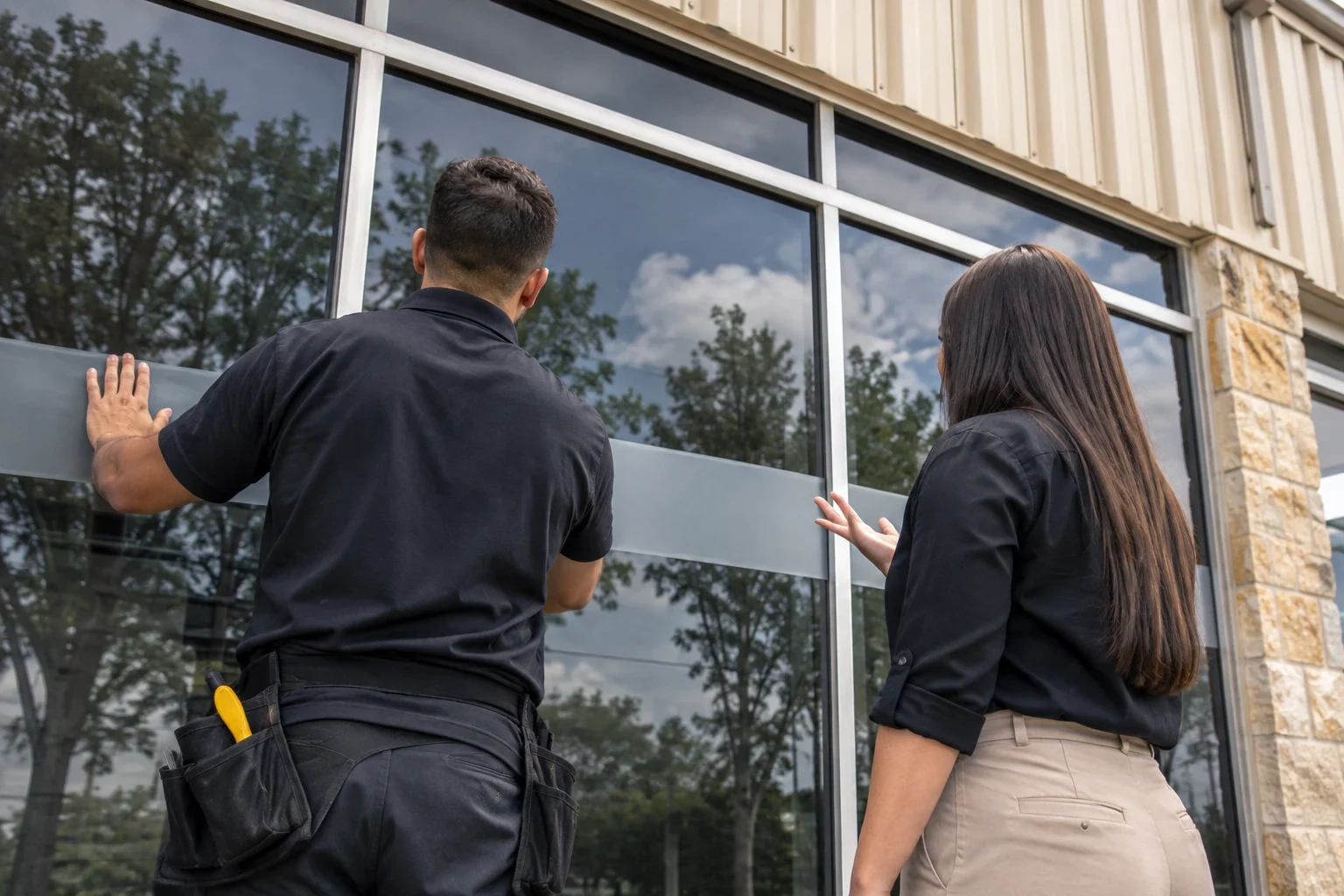
We measure, check glass type and hold film samples up to your windows. You receive a written estimate and a proposed schedule from the same person.
- 3
Installation day
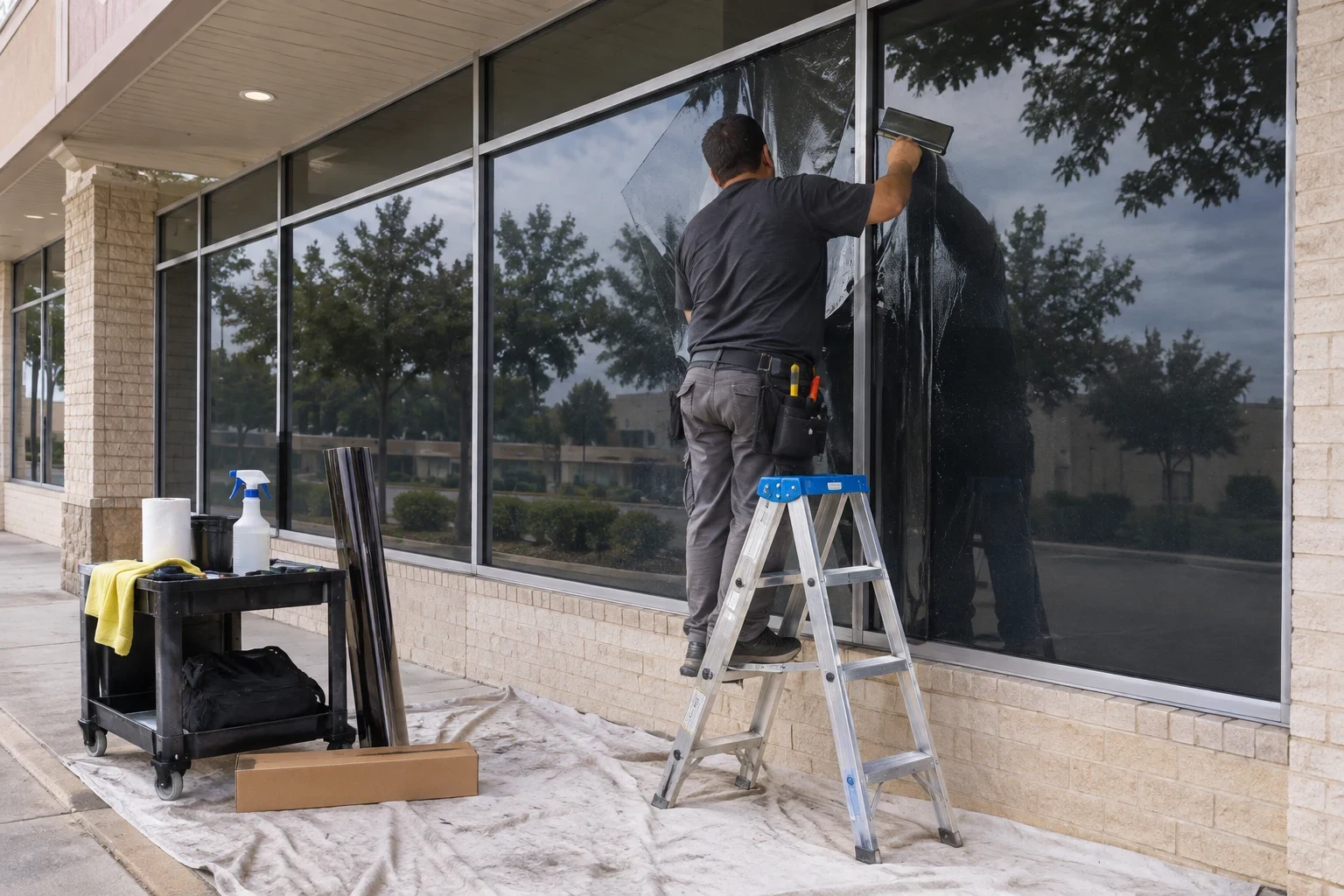
We protect floors and fixtures near the glass, clean each pane, apply the film and squeegee it flat. Work moves section by section so most of your space stays open.
- 4
Curing and final check
For the first days after install, a faint cloudiness or a few tiny moisture spots under the film is normal and fades as the adhesive dries. We walk the job with you and return to look at any pane that has not cleared when it should.
Commercial Window Tinting Questions
Will window film make the inside of our business too dark?
Not if the film is chosen with daylight in mind. Several ceramic and non-reflective options block much of the sun's heat yet keep rooms bright, so the space still feels open. We bring samples so you can see the result on your own glass before deciding.
Can you work while we stay open?
Usually, yes. We work one section at a time, keep tools and supplies out of walkways and talk with you about the quietest hours for the busiest areas.
Will film look different from outside?
It depends on the film. Reflective films give a mirrored look in daylight, while non-reflective films keep the exterior close to untreated glass. If your building has a property manager or appearance guidelines, we can help you pick something that fits.
Is film safe for our double-pane windows?
Most insulated glass takes film well, but some films absorb more heat than certain glass should handle. We check the glass type during the site visit and recommend only films suited to it.
Who do we contact if something comes up after the install?
The same person who handled your estimate and scheduling. You will not be passed to a different office, and that person already knows your building and the film we used.
Talk Through Your Building With Us
Tell us which windows give you trouble and what you want to fix. We will visit, show you film samples on your glass and give you a clear written quote.