Does Window Tint Help With Heat in a Deer Park House?
The short version is yes, but the film you choose and the windows it goes on decide how much cooler a room actually feels.
Does window tint help with heat in the house?
Yes. Good window film blocks a large share of the sun's heat before it gets into the room, so sunny rooms stay cooler and the air conditioner runs less hard. How much it helps depends on the film type, which way the windows face and the glass you already have. A free consultation sorts that out: (281) 645-5513.
How window film actually stops heat
Sunlight carries heat in three forms: visible light, infrared and ultraviolet. Clear glass lets most of all three through, and once that energy lands on your floor, furniture and walls, it turns into warmth the air conditioner has to remove. Window film is a thin polyester layer applied to the inside of the glass that absorbs or reflects part of that energy before it reaches the room.
The number that matters most is total solar energy rejected, sometimes listed as heat rejection on a film's spec sheet. Darkness alone tells you little. A light ceramic film can reject more heat than a dark dyed film, because it targets infrared, the part of sunlight you feel as warmth but cannot see.
Film also blocks nearly all UV, which is a separate benefit. It slows the fading of rugs, wood floors and upholstery, but UV is not what makes a room hot.
Which film does the most for a hot room
The right film depends on what you want the room to look like as much as how cool you want it. Each type handles heat a little differently, and we bring samples so you can hold them up to your own glass and see the color and clarity in your light.
On a long Gulf Coast summer, the west-facing rooms are usually where people notice the difference first, because late-afternoon sun comes in low and straight through the glass.
- Ceramic film: uses non-metal particles to absorb infrared. Strong heat rejection with a clear, natural look and no interference with phone or Wi-Fi signals.
- Reflective film: a mirrored finish that bounces heat away before it enters. Very effective on harsh exposures, with daytime privacy as a side effect.
- Non-reflective film: cuts heat and glare without the shiny exterior, for homes where a mirrored look would feel out of place.
- Dyed or tinted film: darkens the glass and trims glare, but does less for heat than ceramic or reflective options.
What can limit the results
Film works on the glass it covers, so a room with poorly sealed frames or an attic that bakes all afternoon will still gain heat from those sources. We say so plainly when a window is not the main problem, rather than selling film for a job it cannot do.
Glass type matters too. Many houses in the area still have older aluminum-frame windows, some single pane and some early double pane. Most accept film well, but certain combinations, such as dark film on large double-pane units or some low-E glass, can absorb enough heat to stress the glass. We check what you have and match a film that is rated for it before anything is ordered.
Expect the film to look slightly hazy or show small water pockets for the first days or weeks while it cures. That is normal moisture drying out, and it clears on its own.
What the process looks like from start to finish
One person handles your questions from the first phone call through the final walk-through, so you are not repeating yourself to different people. We visit, look at each window and its exposure, and give you a written estimate that lists the film, the windows and the square footage.
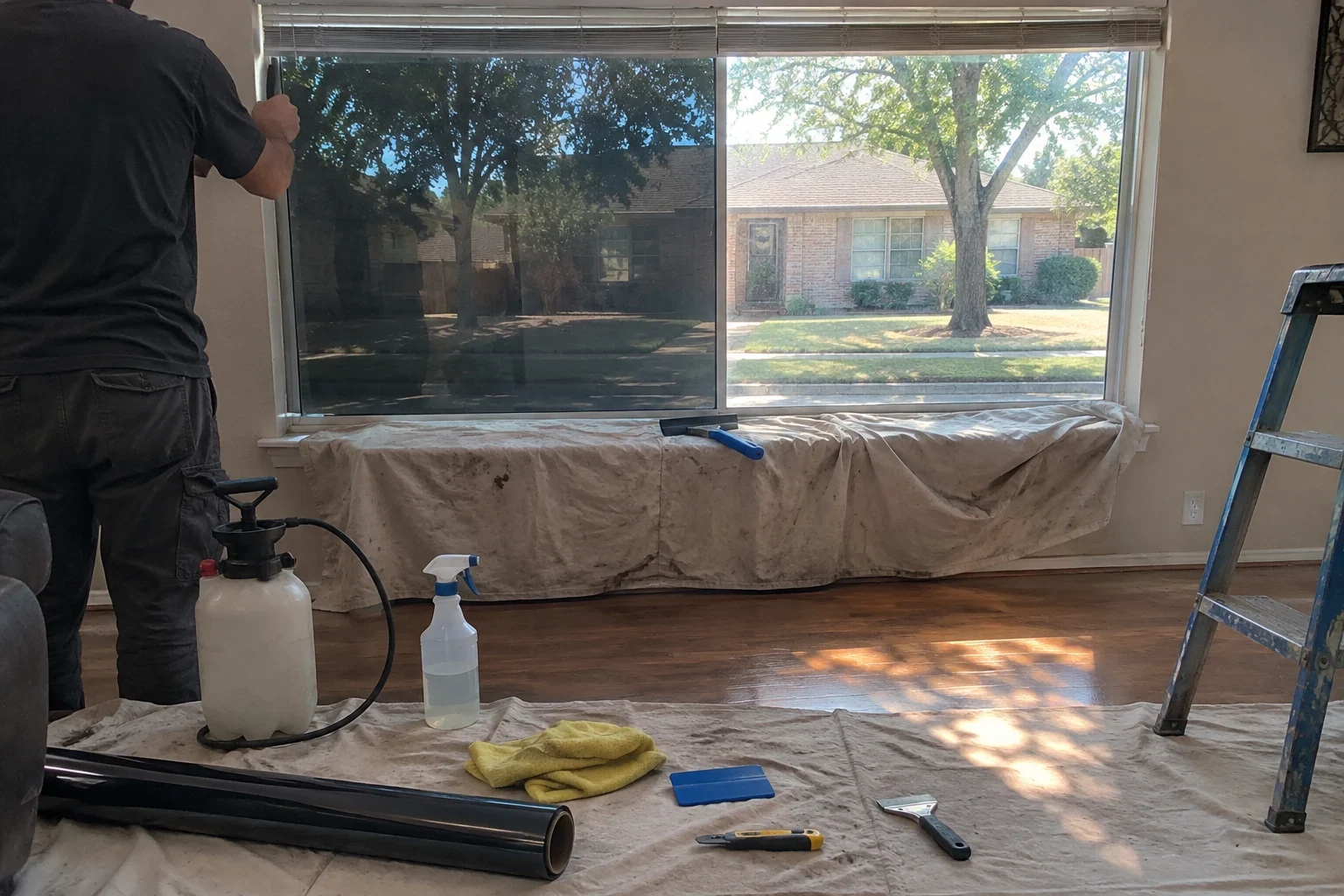
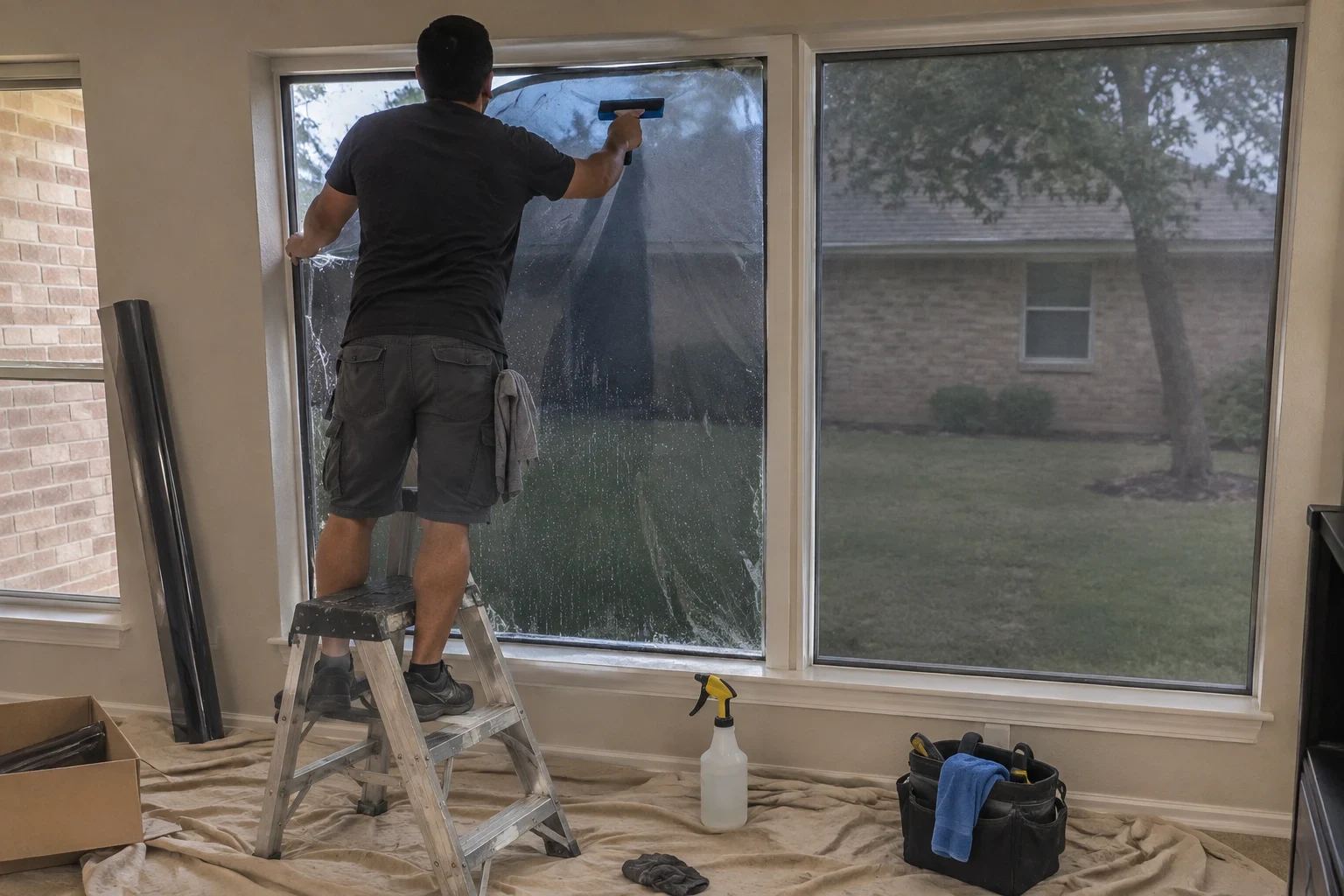
On install day we lay down drop cloths, move what needs moving from the sills and clean the glass thoroughly, since any dust left under film shows forever. The film is cut to the pane, applied with a slip solution and squeegeed flat, then the edges are trimmed so the line sits neatly inside the gasket. Most homes are done in a day, and we wipe down sills and take every scrap with us.
- Free consultation and window-by-window assessment
- Written estimate naming the exact film
- Furniture and floors protected during work
- Care instructions left behind before we go
More questions about window film and heat
Something not covered here? (281) 645-5513
Will window film make my rooms dark?
Not unless you want it to. Light ceramic films reject a good share of heat while looking close to clear, so you can keep the daylight and lose much of the warmth.
Can I still open and clean my windows?
Yes. Film goes on the inside of the glass and does not affect how windows open. After it cures, clean it with a soft cloth and a mild, ammonia-free cleaner, and avoid abrasive pads.
Does window film help in winter as well?
Some films slow heat loss slightly on cool nights, but in a climate like ours the main payoff is summer cooling and glare reduction. We will tell you honestly which benefit to expect from the film you choose.
Find out what film would do for your hottest rooms
Call for a free consultation. We will look at your windows, explain which film fits your glass and the look you want, and give you a written quote you can think over at your own pace.